


Artificial Intelligence has revolutionized how we work, create, and solve problems. However, many users feel frustrated when they don’t get the results they expect. They often treat AI like a simple search engine, but the reality is much more powerful. At Free AI Online, we provide you with unlimited access to optimized AI tools, but to truly unlock their potential, you need to master one essential skill: Prompt Engineering.
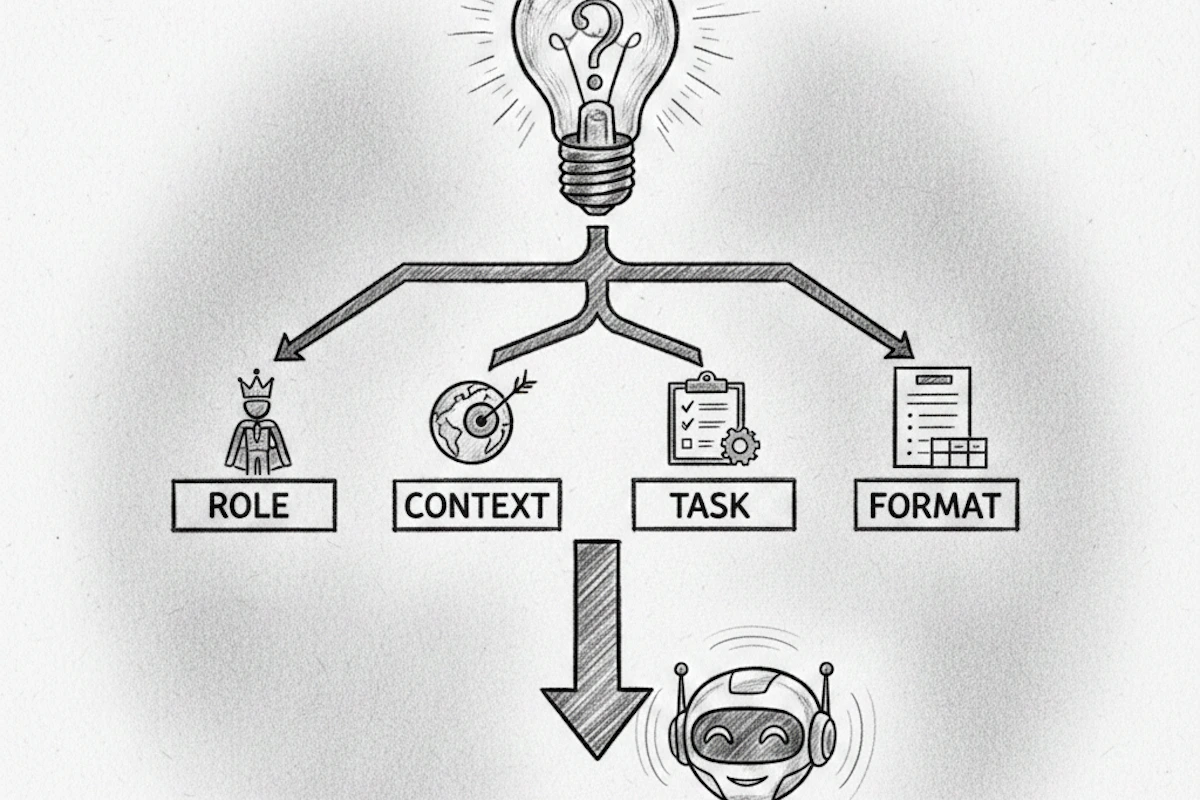
Prompt engineering is the art of crafting precise instructions to guide the AI’s logic. It is the difference between a generic, robotic response and a high-quality, professional output. In this comprehensive guide, we reveal the 5 professional secrets that will transform your AI experience.
1. Assign a persona: The “Act As” technique
One of the most common mistakes is asking a question without defining the expert behind the answer. AI models are trained on vast amounts of data; by assigning a persona, you force the model to filter that data through a specific lens.
- Bad Prompt: “Write a blog post about fitness.”
- Pro Prompt: “Act as a certified personal trainer and nutritionist with 15 years of experience. Write a motivating blog post for beginners who want to start weightlifting.”
Why it works: By setting a persona, the AI adopts the appropriate tone, vocabulary, and authority level. On our platform, using this technique with our writing tools will immediately result in more credible and structured content.
2. Context is king: The “Background Information” rule
An AI is only as smart as the information you provide. If you are vague, the AI has to guess your intentions, which leads to hallucinations or off-topic answers. To get professional results, you must provide context.
A perfect prompt should include:
- The Target Audience: Who is reading this? (e.g., tech experts, children, potential clients).
- The Goal: What do you want to achieve? (e.g., sell a product, explain a concept, entertain).
- The Tone: Should it be formal, witty, or empathetic?
Example: “I am launching a new eco-friendly water bottle. Write a product description for environmentally conscious Gen Z consumers. The tone should be trendy and bold.”
3. The “Chain of Thought” method (step-by-step)
For complex tasks, like coding, solving math problems, or writing deep analyses, asking for the final answer immediately can lead to logic errors. The secret is to ask the AI to “think step by step.”
By adding the magic phrase “Let’s think step by step” or “Break this down into a logical sequence,” you force the AI to process each part of your request individually. This transparency allows the model to verify its own logic before giving you the final output, significantly increasing accuracy.
4. Define the output format and constraints
Don’t let the AI decide how to present the information. You should have total control over the structure. Do you need a table? A Markdown-formatted list? A JSON code block?
Pro Tip: Use constraints to save time. Tell the AI what not to do.
- “Explain the benefits of AI in 200 words or less.”
- “Provide the answer in a comparison table with three columns: Tool Name, Key Feature, and Best Use Case.”
- “Do not use complex jargon; keep it simple for a non-tech audience.”
By being specific about the format, you eliminate the need for manual editing later.
5. Iterative refinement: The conversation secret
Professional prompt engineers rarely stop at the first result. Think of your interaction with our free AI tools as a conversation, not a one-way command.
If the first draft isn’t perfect, don’t start over. Give follow-up instructions:
- “That’s great, but make the introduction more catchy.”
- “Add a few statistics to support the third paragraph.”
- “Now, rewrite this entire text as a series of three tweets.”
This iterative process allows you to polish the content until it reaches a “human-level” quality that is ready for publication.
Related: AI Detector: How to tell if a text is human or artificial?
Your journey to AI mastery starts here
Prompt engineering isn’t just a technical trick; it’s the key to becoming a high-productivity creator in the 21st century. By combining these 5 pro secrets with the unlimited, pre-configured AI solutions at Free AI Online, you are no longer just a user—you are an architect of information.
Start practicing these techniques today on our platform and watch your productivity soar. Remember, the power of AI is limitless, but only if you know how to ask.









Pingback: Deep dive: What is a LLM (Large Language Model)?