

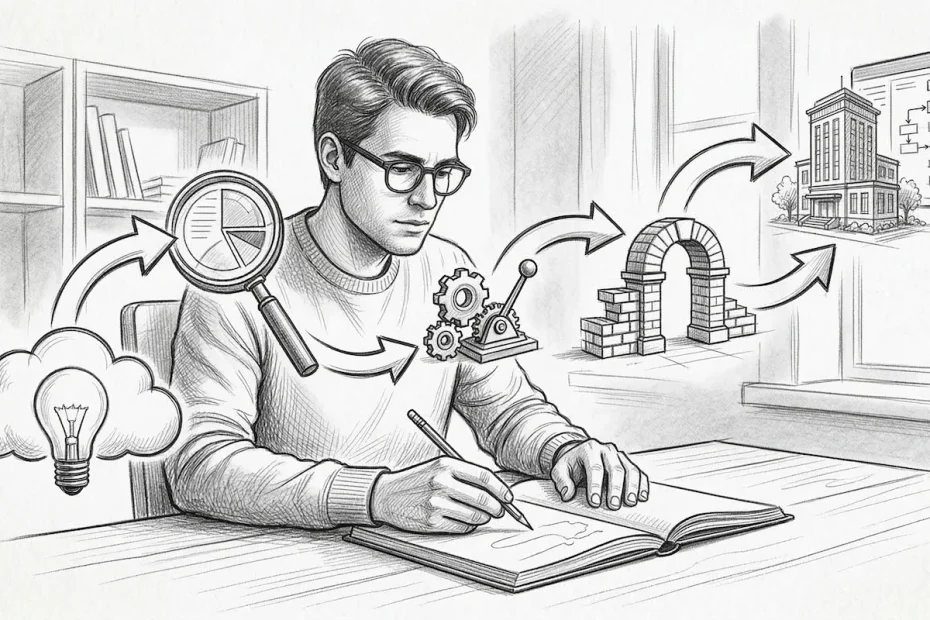
In the world of Generative AI, we often start by asking a single question and expecting a perfect answer. However, for complex projects, a single “mega-prompt” often leads to generic or inaccurate results. This is where Prompt Chaining comes in, the professional technique of breaking a large task into a sequence of smaller, interconnected steps.
Instead of treating the AI like a magic wand, Prompt Chaining treats it like a highly skilled pipeline, where the output of one step becomes the foundation for the next.
The core concept: Thinking in sequences
Prompt Chaining is the process of linking multiple prompts together to achieve a sophisticated goal. Rather than giving the AI ten instructions at once, you give it one, verify the result, and then use that result to trigger the second instruction.
This method mimics how humans work. A chef doesn’t “cook a banquet” in one motion; they prep the ingredients, cook the sauces, sear the meat, and then plate the dish. Chaining applies this modular logic to Artificial Intelligence.
Why use Prompt Chaining?
Using a chain instead of a single prompt offers four major advantages:
- Precision and detail: When an AI focuses on just one sub-task (like “creating an outline”), it produces much higher quality than when it tries to “write a whole book” at once.
- Reduced hallucinations: Large, complex prompts often confuse the model, leading it to invent facts or ignore constraints. Small, focused prompts keep the AI “on track.”
- Human-in-the-loop control: Chaining allows you to pause between steps. You can review the outline (Step 1) and tweak it before the AI starts writing the content (Step 2).
- Handling context limits: By breaking a task down, you avoid overwhelming the AI’s “memory” (context window), ensuring it stays sharp from the first word to the last.
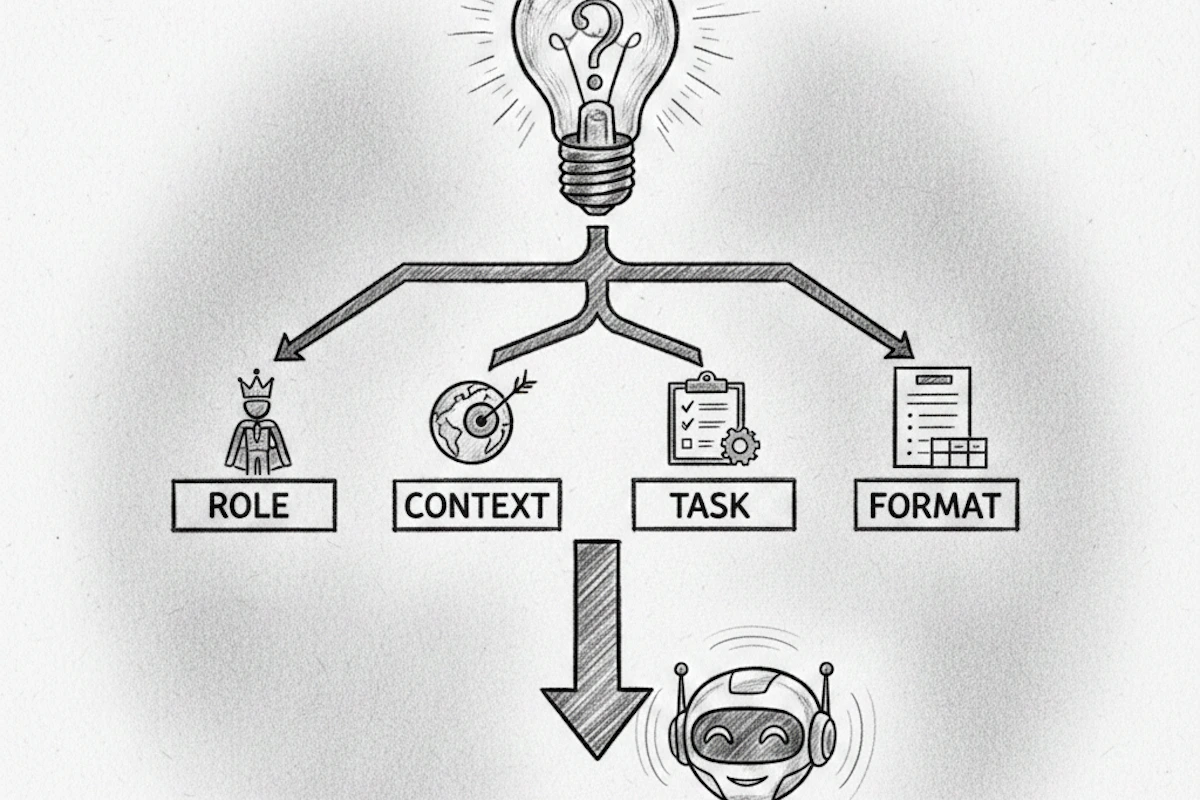
Related: Prompt engineering: The ultimate guide to the R.C.T.F. framework
How a Prompt Chain works: A step-by-Step example
Imagine you want to create a high-quality technical newsletter. A manual chain would look like this:
- Prompt 1 (Research): “Identify the top 3 news stories in AI from the last 24 hours.”
AI Output: Story A, Story B, Story C.
- Prompt 2 (Analysis): “Using the stories identified in Step 1, explain the potential impact of each on small businesses.”
AI Output: Impact analysis for A, B, and C.
- Prompt 3 (Formatting): “Take the impact analysis from Step 2 and format it into a professional email newsletter with a catchy subject line.”
AI Output: The final newsletter.
By separating Research from Analysis and Analysis from Formatting, the final product is significantly more professional and accurate.
Advanced chaining techniques
Beyond simple linear sequences, experts use more complex structures:
1. The feedback loop (Self-correction)
This involves a “Generator” prompt and a “Critic” prompt.
- Step A: The AI writes a draft.
- Step B: The AI is asked to find three weaknesses in that draft.
- Step C: The AI rewrites the draft to fix those specific weaknesses.
2. Parallel processing (Branching)
A single starting point can trigger multiple different chains. For example, a “Product Description” could simultaneously trigger one chain for a LinkedIn ad and another for a Technical User Manual, ensuring both are based on the exact same source data.
3. Data transformation
Chaining is excellent for converting data formats. You might have one prompt that extracts data from a messy transcript, a second that cleans the text, and a third that converts it into a structured summary.
Tools for automation
While you can “chain” manually by copying and pasting in a chat window, the future of this technique lies in automation.
Platforms like Zapier, Make.com, or developer frameworks like LangChain allow you to build these sequences so they run automatically. This turns a simple AI into an “Agent”, a system capable of completing entire multi-step business processes without constant supervision.
The path toward AI mastery
Prompt Chaining is the bridge between “playing” with AI and “working” with AI. It moves the user from being a simple prompter to being an AI Architect. By mastering the art of the sequence, you unlock the ability to generate work that is not just “good for an AI,” but truly professional-grade.






Pingback: Art through AI: Discover AI Art Critique, our free and unlimited tool