

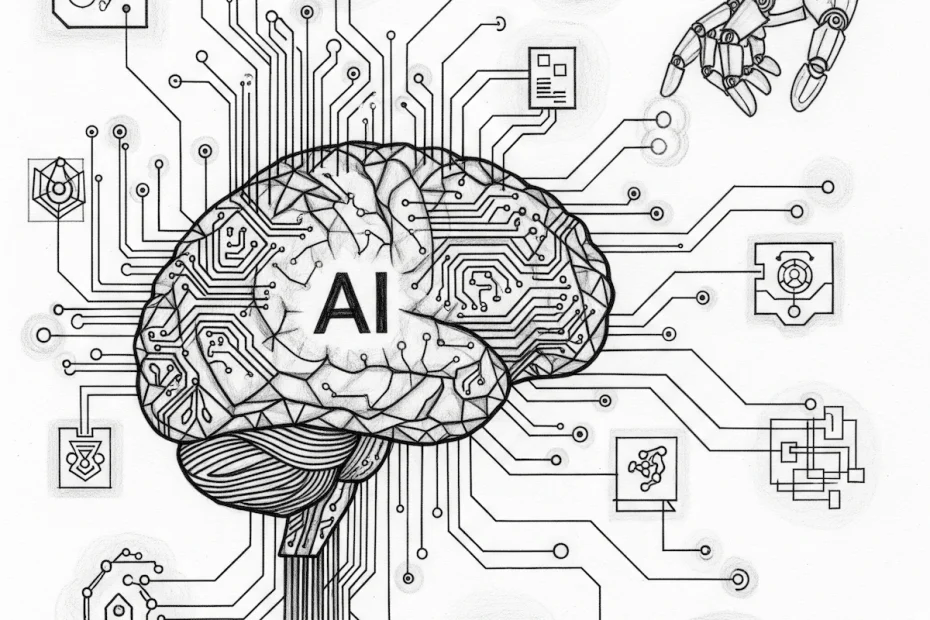
Artificial intelligence is transforming our world at a breathtaking pace, reshaping numerous sectors while raising ethical and societal questions. From automating daily tasks to solving complex problems, AI has become an essential pillar of our era. In this article, we explore how AI is used across the globe, its practical applications, its impacts, and the challenges it poses for the future.
AI at the Service of Industries: A Global Transformation
In healthcare, AI is revolutionizing diagnostics and patient care. For instance, deep learning algorithms analyze medical images to detect cancers with accuracy sometimes surpassing that of radiologists. In Japan, systems like those developed by Fujifilm use AI to identify anomalies in lung scans, reducing diagnosis time.
In Africa, where access to healthcare professionals is often limited, apps like Ada Health enable users to receive preliminary medical assessments via their smartphones.In the transportation sector, AI is at the core of autonomous vehicles. Companies like Waymo in the United States or Baidu in China are testing fleets of self-driving cars capable of navigating complex urban environments.
These advancements promise to reduce accidents caused by human error, but they also require adapted infrastructure and strict regulations.
The manufacturing industry is not left behind. In Germany, smart factories use AI to optimize production lines. Siemens, for example, integrates AI systems to predict machine failures, minimizing downtime and boosting efficiency. These technologies enable companies to remain competitive in a globalized market.
Related Articles : Apple Gears Up to Challenge OpenAI with Its Own AI Chatbot
AI in Everyday Life: A Discreet but Powerful Presence
AI is not confined to industries; it has entered our homes through virtual assistants like Alexa or Siri, simplifying daily task management. In India, where smartphone penetration is rapidly growing, apps like Google Translate use AI to break down language barriers, enabling millions to communicate in languages they don’t master.
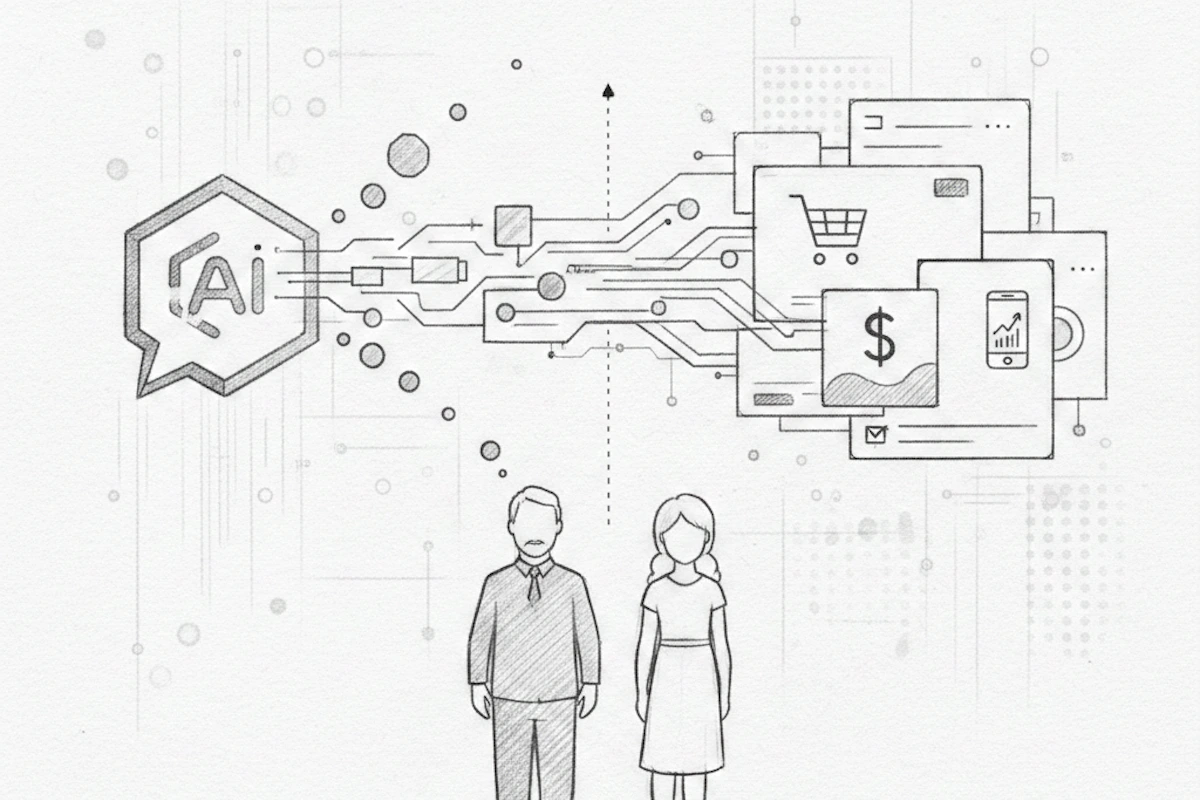
In e-commerce, AI personalizes the user experience. Platforms like Amazon or Alibaba analyze purchasing behaviors to recommend products with uncanny precision. In 2024, around 80% of interactions on e-commerce sites were influenced by AI algorithms, according to a McKinsey study.Education also benefits from AI.
Platforms like Duolingo adapt their courses based on learners’ progress, while tools like Grammarly help millions of students worldwide improve their writing.
In South Africa, initiatives like Siyavula use AI to offer personalized math lessons to students, even in remote areas.
AI Accessible to All Through Free Platforms
To democratize access to AI, initiatives like our website free-ai-online provide free AI tools to all users. Whether you’re a curious student, an aspiring entrepreneur, or a professional looking to explore AI’s capabilities, our platform offers simple and powerful solutions at no cost.
From text generation to data analysis, free-ai-online.com enables everyone to discover and experiment with AI’s potential, helping to reduce technological barriers and promote inclusive adoption worldwide.
Ethical and Societal Challenges
Despite its advancements, AI raises significant concerns. In China, the use of AI for mass surveillance through facial recognition systems fuels debates about privacy. In Europe, the General Data Protection Regulation (GDPR) aims to curb abuses, but massive data collection remains a critical issue.Another challenge is AI’s impact on employment.
According to the World Economic Forum, automation could displace up to 85 million jobs by 2030 while creating new opportunities in sectors like cybersecurity or AI development.
Developing countries, where educational infrastructure is sometimes limited, risk seeing inequalities widen if retraining programs are not implemented.Finally, the issue of algorithmic bias remains central. In the United States, cases have shown that algorithms used in predictive justice can discriminate against certain communities.
This highlights the importance of developing transparent and inclusive AI, a challenge that organizations like UNESCO are addressing through global ethical frameworks.Toward a Responsible FutureAI is a global transformative force, but its potential depends on how we use it.
Governments, businesses, and civil society must collaborate to establish ethical standards, ensure inclusion, and minimize risks. Initiatives like the Global Partnership on Artificial Intelligence (GPAI) pave the way by fostering international cooperation.
In conclusion, AI is redefining our world, from operating rooms to the streets of megacities, and even our smartphones. Thanks to platforms like free-ai-online.com, it is becoming accessible to everyone, paving the way for more equitable adoption. While it offers unprecedented opportunities, it also challenges us to rethink our relationship with technology. It’s up to us to ensure this revolution benefits all while preserving our core values.




Pingback: New: Your free AI Fitness Coach is finally here!