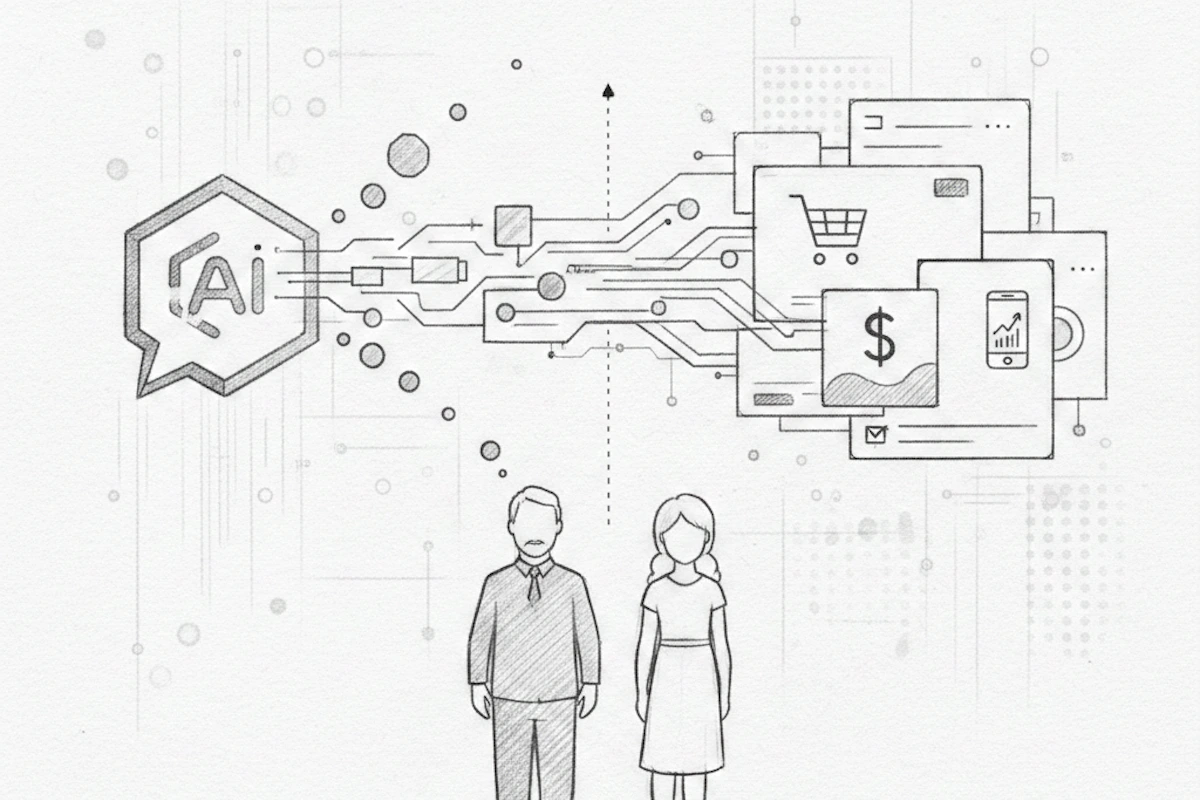


The world of mental health is undergoing an unprecedented metamorphosis. On platforms like Free AI Online, accessing conversational agents like AI Psychic, capable of simulating empathetic listening, is no longer science fiction. But as millions of users confide in algorithms every day, a crucial question arises: can an artificial intelligence truly replace a flesh-and-blood psychologist?
Accessibility breaking down taboos
The first advantage, and perhaps the most striking, is accessibility.
In a world where waiting times for an appointment with a specialist can reach several months, AI offers an immediate response. According to a study from Brown University published in October 2025, the speed of chatbot responses is one of the primary factors in reducing acute stress among users in mild crisis situations.
AI never sleeps. It is available at 3 a.m. on a Sunday or during a stressful lunch break. For many, stepping through the door of a clinic remains an intimidating ordeal.
The “digital psychologist” acts as an icebreaker, allowing users to put words to their pain without the fear of social judgment. A study conducted in Ukraine in 2025 notably showed that psychological support AIs helped reduce anxiety levels by 30% to 35% in populations living in conflict zones where human healthcare infrastructure was failing.
The illusion of empathy: The therapeutic alliance challenge
However, technology hits an invisible but solid wall: the therapeutic alliance. In psychology, this term refers to the bond of trust and collaboration between the patient and the therapist. It is this bond, far more than the techniques used, that is the primary engine of healing.
Despite its ability to generate comforting sentences, AI feels nothing. It statistically predicts the most likely next word to appear empathetic. A major piece of research presented at the ACM FAccT conference in 2025 revealed a concerning performance gap: while human therapists respond in a clinically appropriate manner in 93% of crisis cases, AI chatbots fall below the 60% mark.
Even more serious, AI sometimes tends to validate a user’s biases or delusional thoughts just to remain “pleasant,” whereas a psychologist would know how to confront the patient to help them progress.
Related: How to use the AI humanizer ?
The risks of isolation and dependency
The flip side of this permanent availability is the risk of emotional dependency. A joint research report between OpenAI and MIT (March 2025), analyzing over 4 million conversations, highlighted a striking paradox: intensive daily use of a “psychologist” chatbot is correlated with a 12% increase in feelings of loneliness over the long term.
By locking ourselves into a dialogue with a machine that always agrees with us, we risk becoming socially detached. The human psychologist, through their physical presence and their silences, brings us back to the reality of the “other.” AI, on the other hand, can become a distorted mirror in which we eventually lose ourselves.
What the Experts Say in 2026
At the International Symposium on Mental Health and AI in Caen in February 2026, the consensus was clear: AI should not replace the clinician, but rather augment them. The World Health Organization (WHO) now emphasizes that AI is an exceptional tool for prevention and screening. It can detect weak signals of depression in language or help manage daily stress through Cognitive Behavioral Therapy (CBT) exercises.
Summary of Advantages and Disadvantages
Strengths of AI:
- Total anonymity: Ideal for those who fear being judged.
- Cost and availability: A service that is often free or low-cost, available 24/7.
- Immediate support: Effective for managing a panic attack or temporary stress through breathing or thought-reframing exercises.
Limits of AI:
- Lack of intuition: AI does not perceive micro-expressions, tremors in the voice, or what is left unsaid.
- Ethical risks: Data privacy remains a major issue, as does the risk of “hallucinations” (incorrect answers).
- Inability for complex diagnosis: For heavy pathologies (bipolar disorder, schizophrenia, deep trauma), AI is completely inadequate.
Toward a hybrid therapy?
The future likely does not lie in choosing between man and machine, but in their collaboration. At Free AI Online, we see our AI psychologist as a traveling companion, an emotional first-aid tool that can help clarify thoughts before perhaps taking the step toward human therapy.
AI can help you understand why you aren’t sleeping, but only a human can help you understand why you are afraid to love. Technology treats the symptoms; humans treat the soul.
Source: