


Just 90 days after the release of version 4.5, Anthropic is already shaking up its own timeline with the launch of Opus 4.6. While the frequency of these updates might be surprising, the stakes have clearly shifted: the model is no longer content with being a developer’s best friend, it aims to become the universal co-pilot for the corporate world.
From lines of code to financial statements
For a long time, the Opus lineup was perceived as a niche tool, ultra-efficient for software development via Claude Code. That era is over. Opus 4.6 marks a strategic pivot toward versatility.
We are now seeing massive adoption by a wider range of professionals:
- Financial analysts: For processing complex market data.
- Product managers: For synthesizing user feedback and roadmap planning.
- Legal professionals: For auditing massive contract databases.
Ending memory constraints
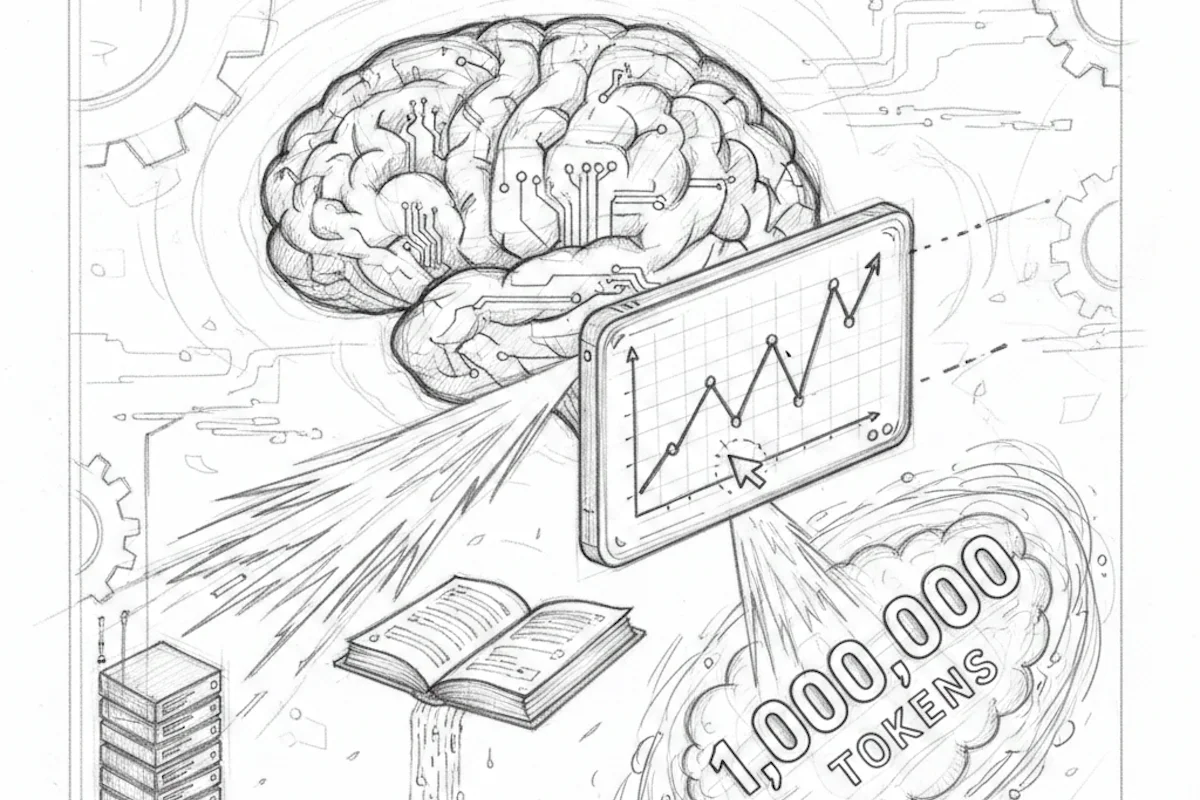
One of the pillars of this version is the expansion of the context window to 1 million tokens. For the user, this means an end to the tedious task of splitting documents. Whether it’s analyzing an entire legacy codebase or ingesting annual reports spanning hundreds of pages, Opus 4.6 processes information as a single block, ensuring unprecedented analytical consistency.
Related: Apple and Google: New Gemini-Powered Siri set to debut in february
The parallel work revolution: “Agentic Teams”
The true technological breakthrough, however, lies in the introduction of Agentic Teams. Until now, AI models processed tasks sequentially (Step A, then Step B).
Now, the model can orchestrate parallel execution:
- A complex task is fragmented into sub-missions.
- Multiple specialized agents work simultaneously on these segments.
- The results are consolidated in record time.
This approach doesn’t just save time; it allows for much deeper reasoning, as each “agent” can focus exclusively on a specific facet of the problem. And “Agentic Teams” are available now in research preview, for paid subscribers and API users.
Source: Techcrunch








Pingback: Anthropic enters a new era: A record valuation of $380 Billion