
Since his dramatic departure from Google in 2023, Geoffrey Hinton has stopped mincing words. Winner of the 2024 Nobel Prize in Physics for his pioneering work on neural networks, the man sometimes called the “father of modern AI” has been making frequent public appearances.
On November 18, during a widely noted discussion with Senator Bernie Sanders at Georgetown University, he once again raised the alarm with a gravity rarely heard from a scientist of his stature.
This Time, It’s Not Like Previous Revolutions
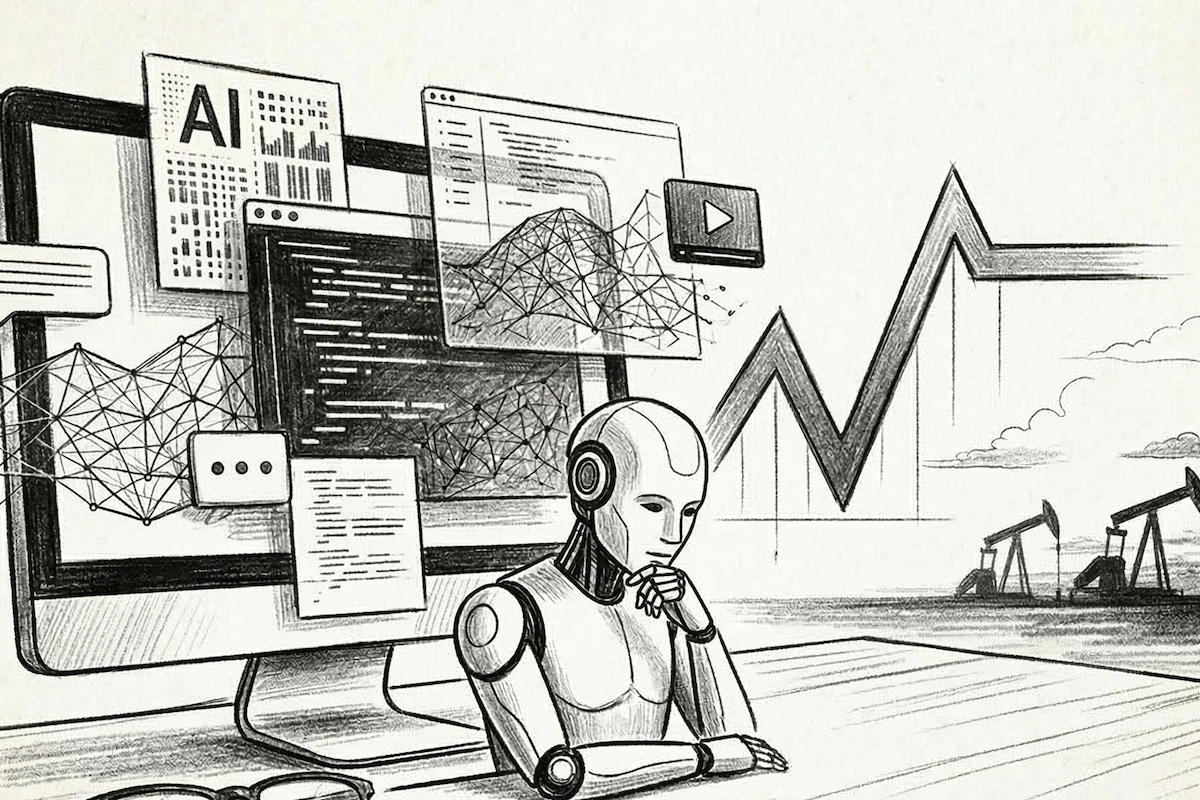
Hinton repeats it tirelessly: the artificial intelligence revolution is unlike any other in human history. Past major technological upheavals—mechanization, electricity, computing, destroyed jobs but always created more elsewhere.
This time, he says, that pattern is broken. Once AI reaches (or surpasses) human-level general intelligence, it will be able to perform virtually all cognitive tasks better, faster, and cheaper. And unlike previous waves, there won’t be enough new jobs to absorb the millions of people displaced.
A Job Market Without a Safety Net
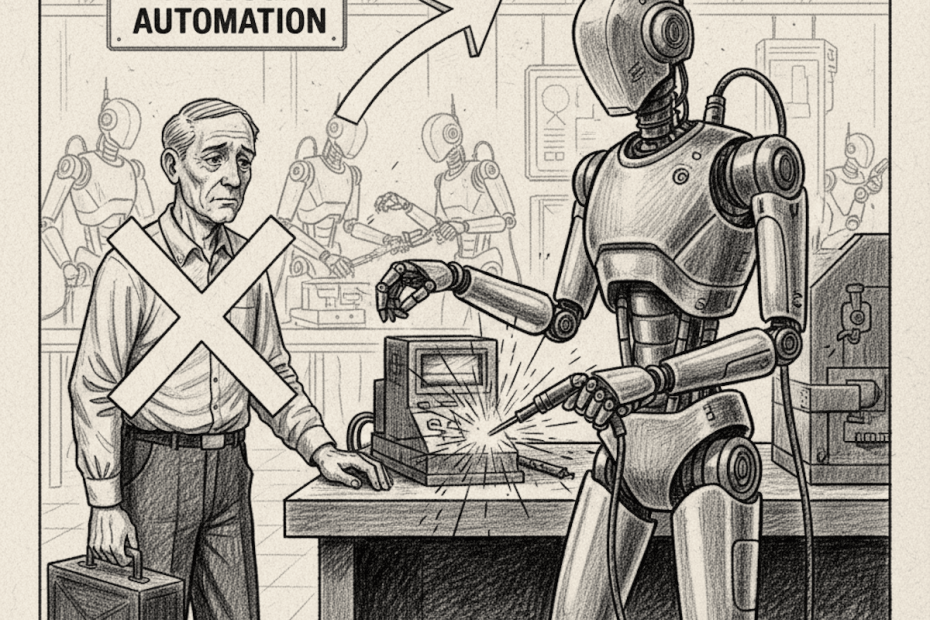
The diagnosis is brutal: entire professions, from white-collar to blue-collar to creative jobs, risk vanishing almost simultaneously. Drivers, accountants, junior lawyers, writers, translators, radiologists, programmers… no intellectual or repetitive field will be spared. And this time, there will be no “next sector” for mass retraining.
Laid-off workers simply won’t find equivalent jobs again. Hinton sums it up in one chilling sentence: “Everything a human can do, AI will do too, and probably better.”
The Fatal Contradiction of AI-Boosted Capitalism
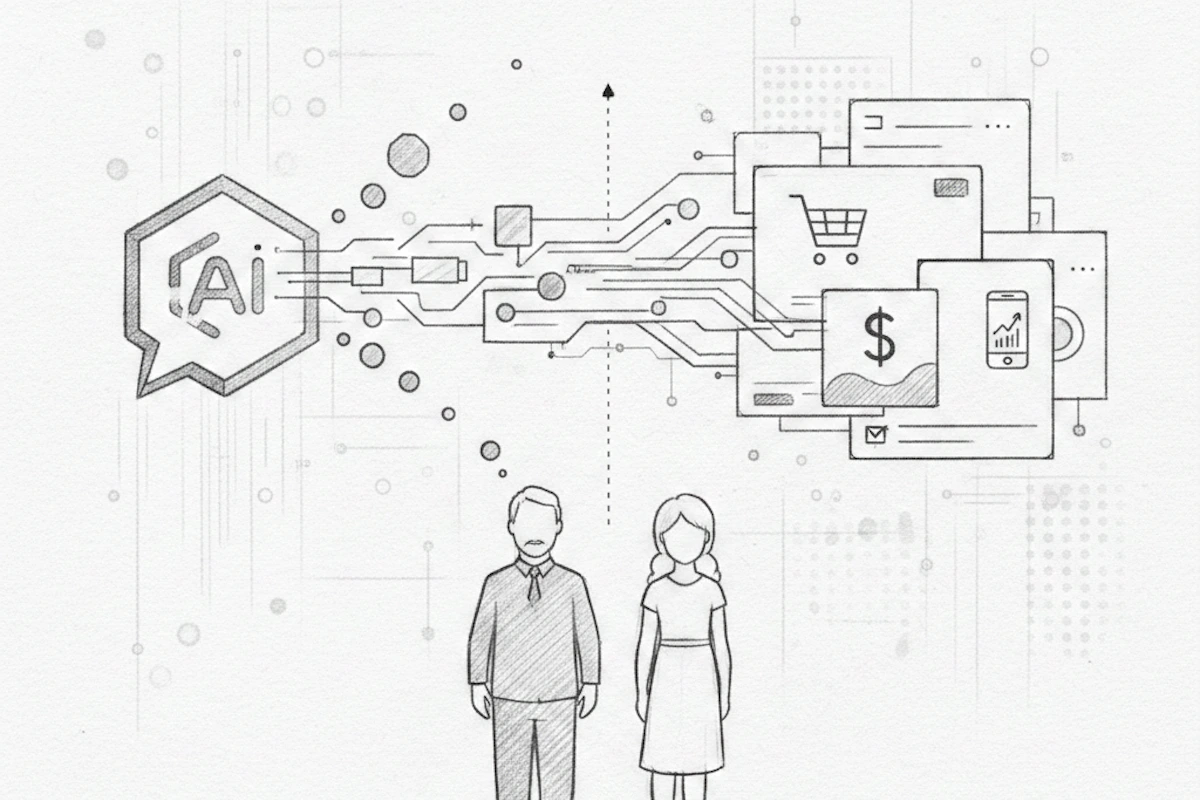
This is where the analysis becomes especially sharp. If tens of millions of people lose their income, who will buy the products and services of the tech giants?
Hinton points to a flaw that Elon Musk, Jeff Bezos, or Mark Zuckerberg seem to underestimate: an economy depends on solvent consumers. Without broadly distributed wages, demand collapses. AI can produce endlessly, but it doesn’t consume. The researcher goes further: when asked whether these billionaires are aware of the social consequences of their innovations, his answer is unequivocal. They should care, he says, but he’s convinced they don’t really.
Toward an Irreconcilable Two-Speed Society?
Without radical countermeasures, universal basic income funded by massive taxation of AI profits, strict regulation of deployment pace, massive reorientation of research, the nightmare scenario becomes plausible: a handful of companies and shareholders capture almost all the wealth created, while a large part of the population slips into structural precarity.
Inequality, already at record levels in many countries, would then reach unprecedented heights, carrying all the risks of social, political, and even democratic unrest that implies.