

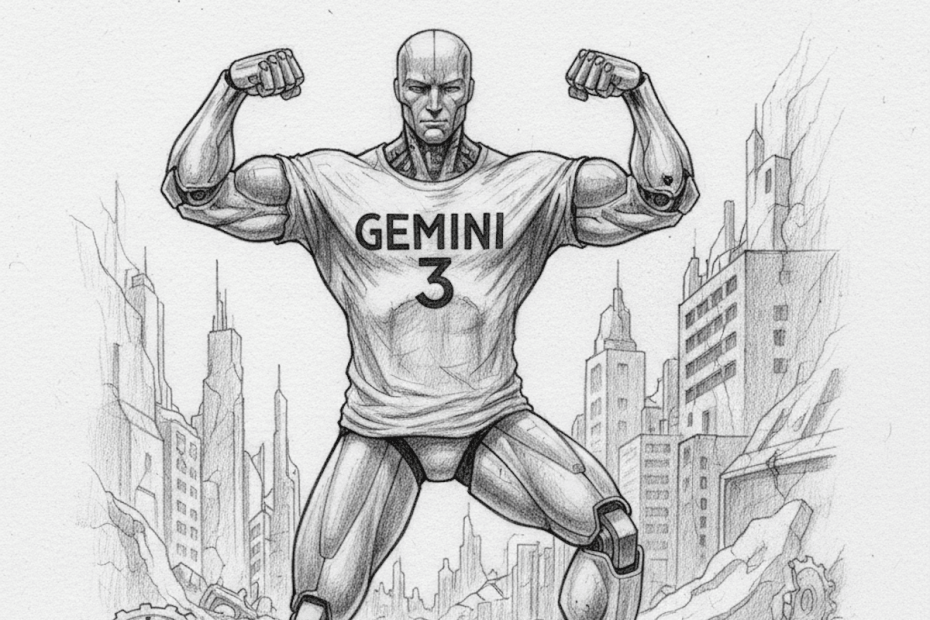
Announcements are coming thick and fast in the AI universe.On November 18, 2025, Google unveiled Gemini 3 Pro, a model that pushes the boundaries of performance benchmarks and is already winning over early testers.
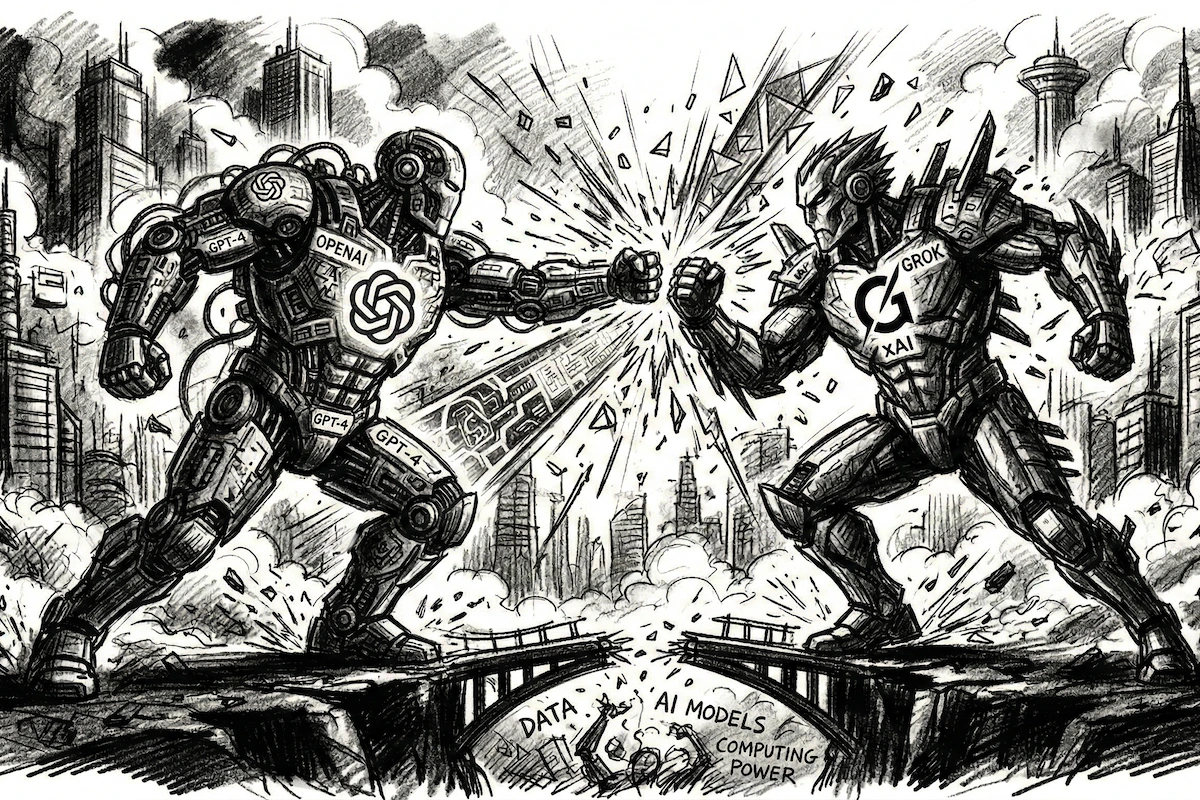
Less than 48 hours later, OpenAI counterattacked with the launch of GPT-5.1-Pro and GPT-5.1-Codex-Max, two high-end variants designed for the most demanding needs. These developments highlight an intense competitive dynamic, where Google seems to be gaining ground on the consumer front while OpenAI demonstrates its technical resilience.
Gemini 3 Pro: A New Benchmark in Multimodal Reasoning
Gemini 3 Pro arrives as a major evolution in Google’s family of models. Available starting November 18 via the Gemini app for Workspace subscribers, this system excels in handling complex queries involving text, images, audio, and video. According to internal evaluations, it reaches unprecedented highs on tests like Humanity’s Last Exam, with a score of 37.4%, surpassing previous records. On the LMSYS arena, it also dominates user satisfaction-based rankings.One of Gemini 3 Pro’s standout strengths lies in its ability to anticipate the context and intent of requests, thereby reducing the need for multiple reformulations.
This translates into more precise and nuanced responses, tailored to creative or in-depth analytical scenarios. Google is already integrating this model into its everyday tools: the Gemini app, AI search modes like AI Mode and AI Overviews, as well as its enterprise solutions.
The phased rollout initially targets users over 18 in regions where the app is accessible, with a global expansion planned in the coming weeks.In parallel, Google has introduced innovations like Deep Think mode, which amplifies multimodal reasoning performance, and an agentic coding interface named Antigravity.
The latter combines a prompts window, an online command-line terminal, and real-time previews of changes, facilitating interactive development sessions. These additions position Gemini 3 as a versatile tool, capable not only of generating content but also full user interfaces, such as web pages or basic apps, in response to a single instruction.
OpenAI’s Swift Response: GPT-5.1-Pro and Codex-Max for Elite Demands
In the face of this advance, OpenAI didn’t hesitate to react. On November 19, the company presented GPT-5.1-Pro, an optimized version of its GPT-5.1 series, focused on smoother reasoning and enriched conversational interactions. This model, which follows an initial GPT-5 iteration marked by recent adjustments, emphasizes dynamic adaptation of thinking time: longer for tough puzzles, shorter for simple exchanges.
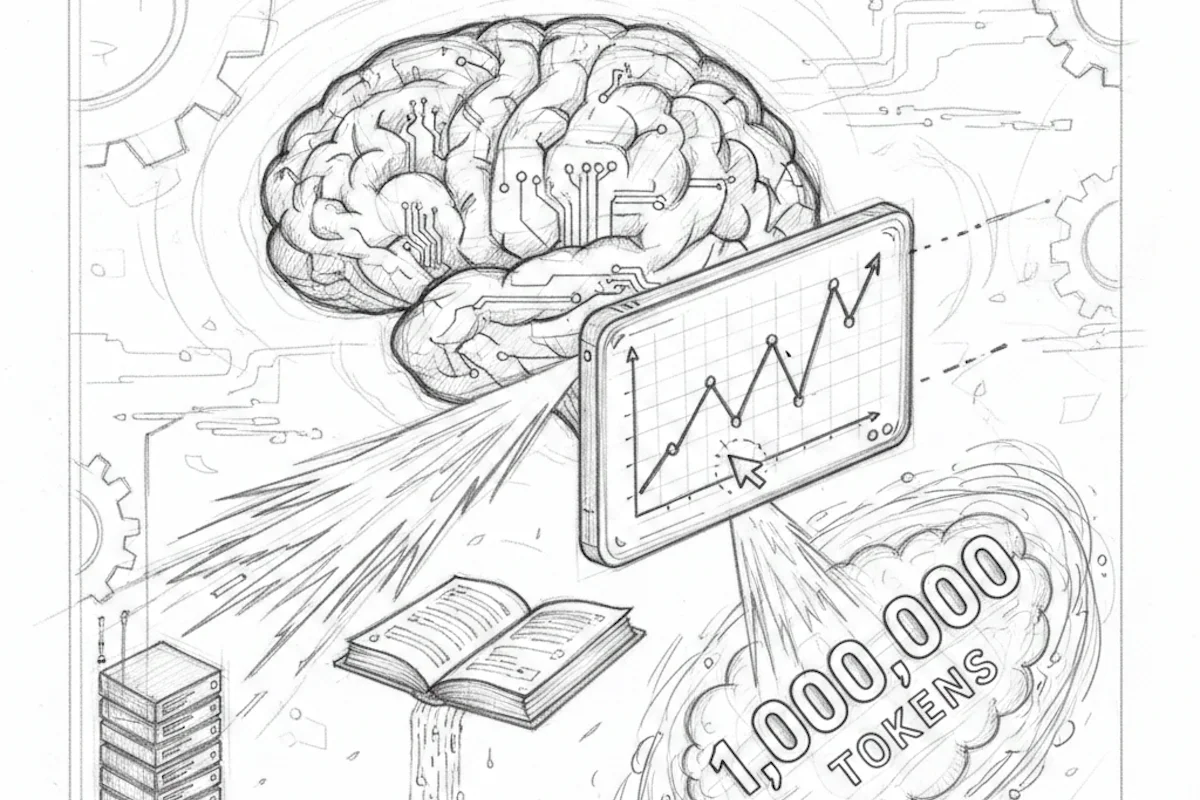
It also adopts a more empathetic and warm tone, making dialogues more natural and engaging.But it’s GPT-5.1-Codex-Max that steals the show in this counterstrike. Designed specifically for long-duration agentic coding tasks, this model handles extended workflows thanks to an innovative technique called “compaction.” This allows condensing session histories to maintain coherence over millions of tokens, avoiding context losses that hindered previous iterations.
OpenAI reports internal tests where Codex-Max operated autonomously for over 24 hours on a single mission, such as massive refactorings or deep debugging.Available immediately for ChatGPT Plus, Pro, Business, Edu, and Enterprise subscribers, Codex-Max replaces its predecessor as the default option in Codex environments (CLI, IDE extensions, cloud, and code reviews).
On the SWE-Bench Verified benchmark, it achieves 77.9% success, a notable jump from the previous version’s 73.7%, while consuming 30% fewer reasoning tokens. Trained natively for Windows and Mac environments, it integrates transparent logs and test citations to facilitate human oversight. API access is imminent, enhancing its appeal to professional developers.
A Courteous Exchange at the Industry’s Summit
Amid this acceleration, a gesture of fair play has captured imaginations. An hour after Google’s announcement, Sam Altman, CEO of OpenAI, praised the competitor’s effort on X: “Congratulations to Google on Gemini 3! It looks like an excellent model.”
This message, viewed millions of times, reflects a rare maturity in a sector often dominated by rivalry.
Sam Altman, who navigated turbulent waters during the initial rollout of GPT-5, seems to recognize the value of collective innovation.
Outlook: Google in the Lead, OpenAI in Ambush
Since its hesitant beginnings with Bard in 2023, Google has staged a spectacular comeback, integrating Gemini 3 into its massive ecosystem—from the search engine to cloud services. ChatGPT retains an edge in terms of massive adoption, but Google’s ubiquity could reverse the trend in the medium term. For its part, OpenAI targets premium users with specialized tools, proving its ability to innovate under pressure.
This sequence of events illustrates the vitality of the field: lightning-fast progress in performance, a growing focus on practical utility, and a competition that, despite its intensity, fosters collective advancements. As 2025 draws to a close, eyes are turning to the next iterations, where the balance between accessibility and expertise will continue to reshape.







Pingback: The great AI schism: OpenAI and Anthropic clash over advertising