
Generative Artificial Intelligence has transformed the way we create content, whether textual or visual. However, achieving the exact result you have in mind can still be a challenge. This is where a technique increasingly favored by experts comes into play: Reverse Prompting.
But what exactly is it, and how can you use it to turn your ideas into masterpieces?
What is reverse prompting?
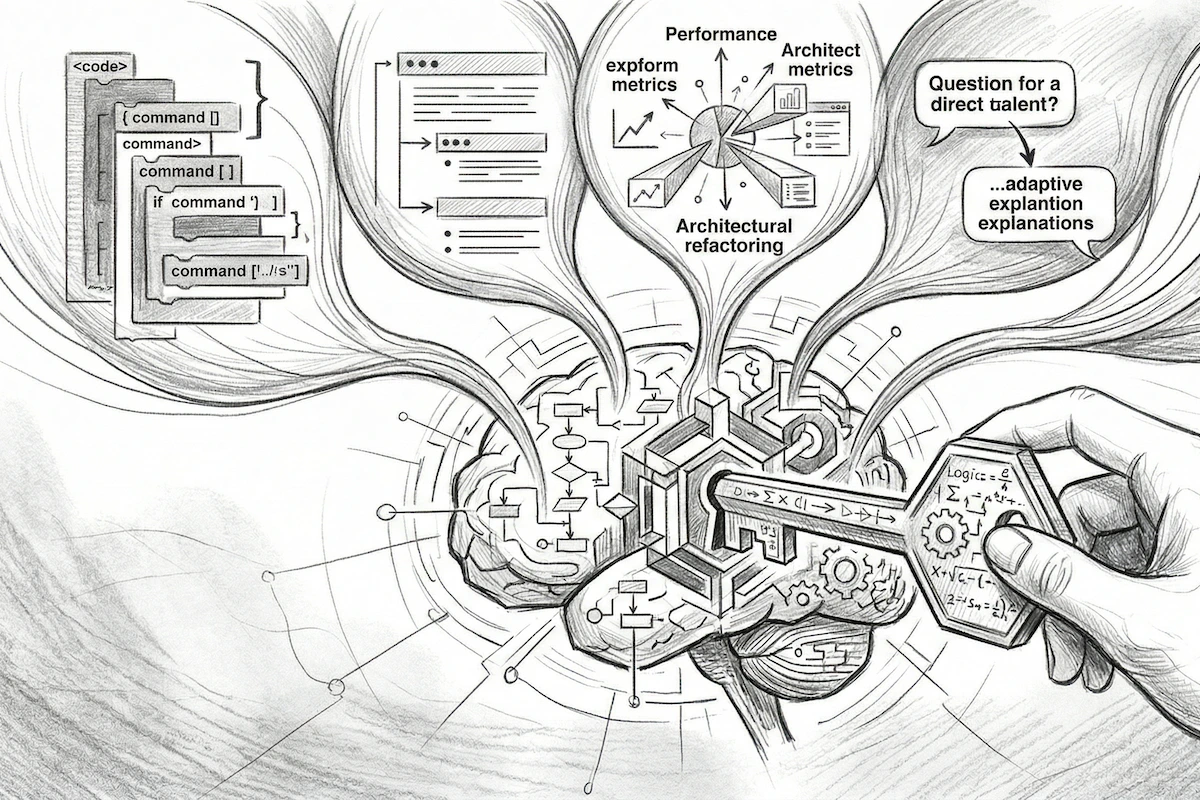
To understand Reverse Prompting (or “prompt reverse engineering”), you first need to understand the traditional process. Usually, you write an instruction (the prompt) and the AI generates a result. Reverse Prompting completely flips this logic: you provide a final result to the AI, such as an image, a paragraph, or a slogan, and ask it to deduce the precise prompt that could have created it.
It is a bit like standing before a gourmet dish and asking the chef to give you the exact list of ingredients and the cooking steps. This method allows you to “hack” the style, structure, and technical nuances of content that inspires you, so you can reuse those elements for your own projects.
Why is this technique essential?
Reverse Prompting is not just a clever trick; it is a powerful learning and optimization tool.
On one hand, it allows you to decode style. If you admire an author’s prose or a graphic designer’s visual output, the AI can analyze the figures of speech, tone, lighting, or even the depth of field used. On the other hand, it saves you precious time. Instead of fumbling for hours to find the right keywords, you start from a solid, proven foundation.
How to practice reverse prompting effectively
The method varies slightly depending on the nature of the content you want to analyze, but the principle remains the same: AI-driven analysis.
1. Reverse prompting for text
If you have a reference text and want to replicate its elegance or marketing effectiveness, copy it and submit it to the AI with a specific instruction. Ask it to analyze the syntactic structure, the level of language, and the hidden intentions behind each sentence. The AI will then return a “Mega-Prompt” that you simply need to adapt to your own topic.
2. Reverse prompting for images (Multimodality)
This is undoubtedly the most spectacular application. By uploading an image, the AI can identify technical elements invisible to the untrained eye, such as the type of simulated camera sensor, artistic influences (Impressionism, Futurism, etc.), or lighting setups.
To do this, you can use most of our free AI tools on our platform, such as our unlimited and free GPT-5.3.
Practice reverse prompting on Free AI Online
One of the main obstacles to Reverse Prompting is often accessing tools capable of “seeing” and analyzing files. This is precisely where our platform, Free AI Online, stands out.
We have integrated advanced features into the vast majority of our free AI models. Unlike many services limited to text, Free AI Online allows you to upload your images directly (via a simple drag-and-drop or by clicking the upload icon) to launch an analysis.
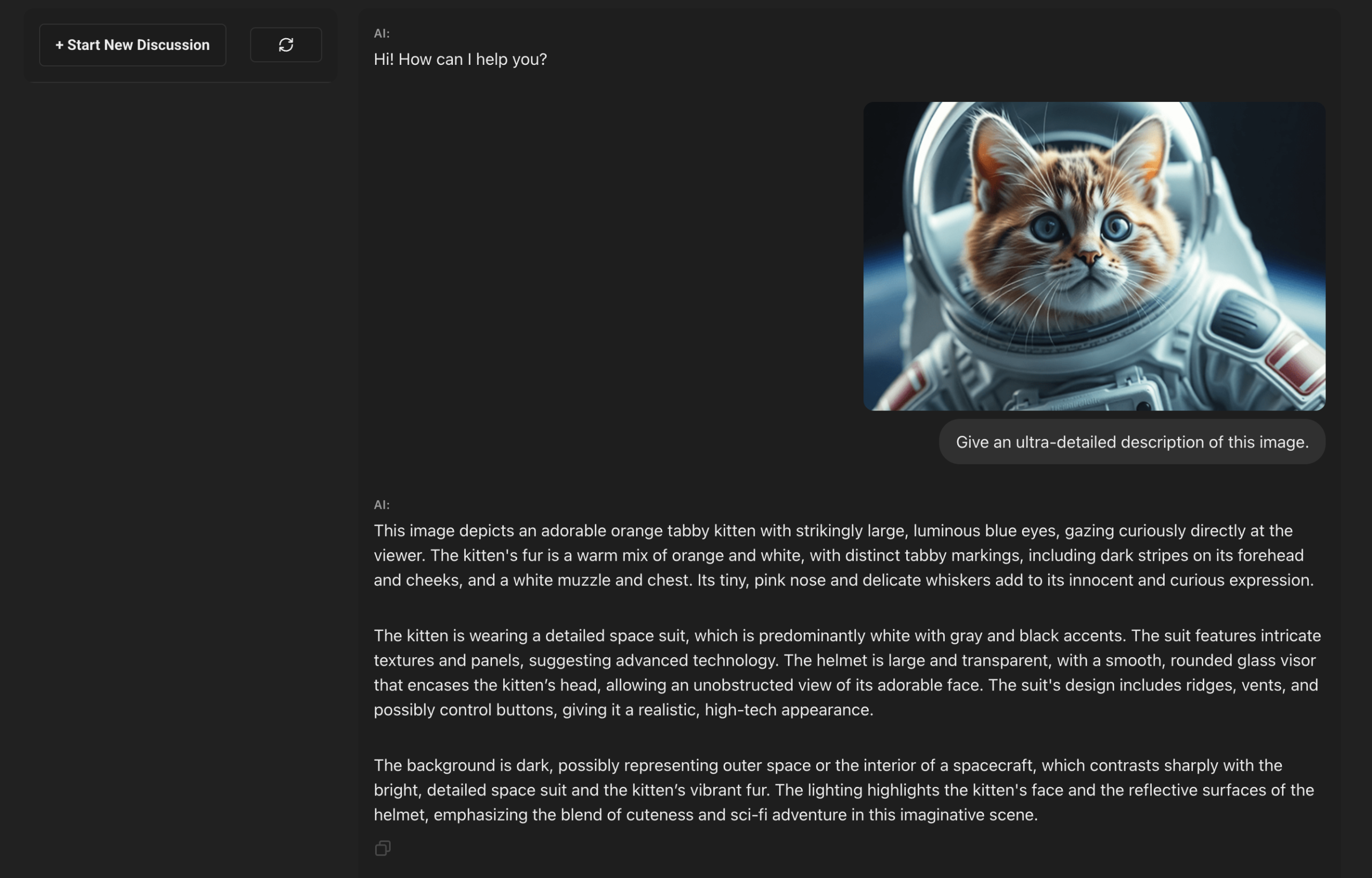
Once your image is uploaded to our platform, you can ask the AI to generate an ultra-detailed technical description. This description then becomes your new prompt, which you can modify or enhance to create unique new visual variations. It is a gateway to limitless creativity, accessible for free and without complex configurations.
Related: Best free Midjourney alternative: Create unlimited AI images on FAIO!
The Future of assisted creation!
Reverse Prompting marks a new stage in our relationship with machines. It is no longer just us giving orders to the AI; it is the AI helping us understand the inner workings of creation. By using this method on Free AI Online, you move beyond simply consuming AI, you learn to master it like a true professional.
Whether you are a community manager, graphic designer, student, or simply curious, Reverse Prompting is the key to moving from an amateur user to an informed creator. Try this approach today on our site and discover the secrets behind your favorite images!