

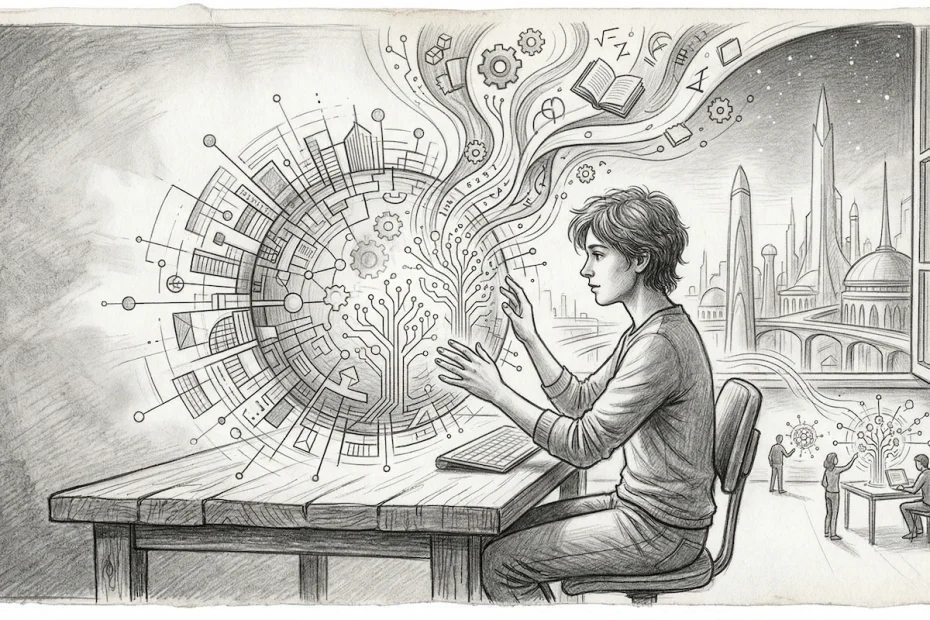
The digital landscape of 2026 has reached a definitive tipping point. After years of “subscription fatigue,” where every basic digital utility required a recurring monthly fee, users are pushing back. The era of the “Sign-up Wall” is fading, replaced by a new philosophy of technology: Open-Access Artificial Intelligence.
Platforms like Free AI Online (FAIO) are not merely providing free tools; they are spearheading a global movement toward digital sovereignty, frictionless innovation, and democratic access to information. In this exhaustive guide, we explore the technical, ethical, and practical reasons why unrestricted Large Language Models (LLMs) are the future of the web.
1. The death of the “Sign-Up” wall: Privacy as a human right
For the better part of a decade, the standard entry price for any advanced digital service was your personal data. To summarize a document, generate an image, or debug a line of code, users were forced to surrender their email addresses, phone numbers, and often their credit card details “for verification.”
In 2026, anonymous AI access is no longer a luxury; it is a primary security requirement.
Why anonymity matters now
The rise of sophisticated data-scraping bots and the frequent occurrence of massive credential leaks have made users wary. When you create an account on a standard AI platform, your “prompts“, which often contain sensitive professional or personal information, are tied directly to your identity.
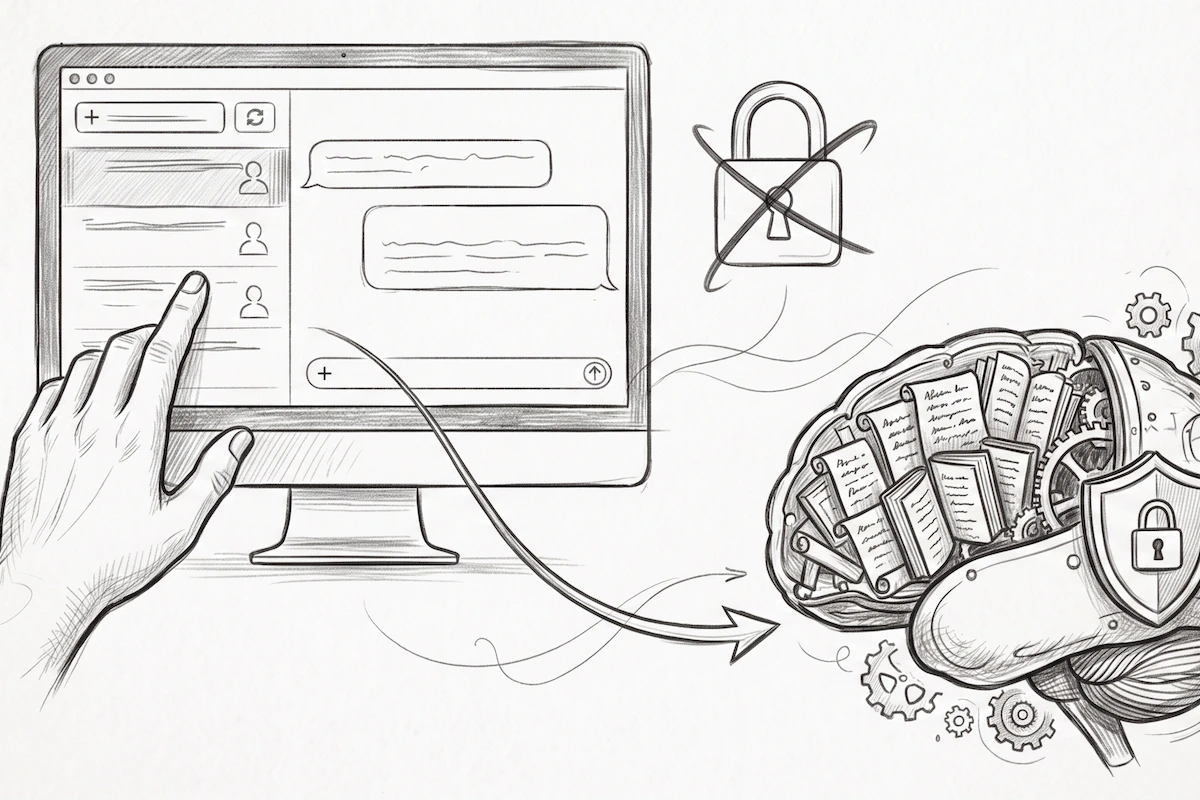
By removing the registration process, FAIO eliminates the primary vector for data harvesting. If there is no account, there is no identity to leak. This “frictionless” model is the ultimate response to the growing demand for privacy. In 2026, being “invisible” online is the highest form of cybersecurity.
2. The technical revolution: Understanding the 2026 AI infrastructure
A common misconception is that “free” AI must be “inferior” AI. This might have been true in 2023, but the technological landscape of 2026 tells a different story. The gap between proprietary, paid models and open-access architectures has vanished due to three major breakthroughs:
A. Model distillation and quantization
Engineers have mastered the art of “distilling” the knowledge of massive 1-trillion parameter models into smaller, hyper-efficient versions. Through advanced quantization (reducing the precision of neural weights without losing reasoning capability), we can now run models that rival GPT-4 or Claude 3 on optimized server clusters at a fraction of the original “compute” cost.
B. The rise of GPT and Mistral next
Open-source architectures have benefited from global collaboration. Models like GPT and Mistral Next have set new benchmarks in reasoning, coding, and multilingual support. By deploying these models, FAIO provides professional-grade performance that is often faster than the “throttled” versions of paid services.
C. Extended context windows
In 2026, the “memory” of an AI is measured by its context window. Our platform leverages architectures capable of processing up to 200,000 tokens in a single session. This allows users to paste entire research papers, legal contracts, or complex codebases for instant analysis, all without hitting a “premium” paywall.
Related: Read our AI Charter
3. The economics of free AI: How FAIO stays sustainable
Transparency is the foundation of trust. Google AdSense and other verification bodies look for a clear, honest business model. Many users wonder: “If it’s free, how do you pay for the massive GPU power required?”
The answer lies in the Ad-Supported Democratic Model.
The “Compute” Cost
Running high-performance AI requires significant electricity and hardware maintenance. While Big Tech giants monetize your identity by building a shadow profile of your interests, FAIO relies on non-intrusive, contextual advertising.
Much like the early days of the open web where search engines were free because of ads, we believe that AI, the most important tool of our century, should be a public utility. This model allows us to pay for the “tokens” and the server uptime while keeping the barrier to entry at zero for students, researchers, and creators.

4. AI in Education and Professional Workflows: Zero-Barrier Innovation
The removal of subscriptions and quotas has a profound impact on several key sectors:
For students and educators
Education should not be limited by one’s ability to pay $20 a month for a “Plus” plan. Open-access AI allows a student in a developing country to have the same “Private Tutor” as a student at an Ivy League university. Whether it’s explaining quantum physics or practicing a new language, FAIO levels the playing field.
For developers and engineers
Coding is an iterative process. When a developer is restricted by “message limits” or “daily quotas,” their creativity is stifled. Our AI Programming Assistant allows for continuous debugging and brainstorming. In 2026, the best code is written through a constant dialogue between human logic and machine precision, a dialogue that should never be interrupted by a “Credit Refill” notification.
Related: An AI that codes for you on FAIO, free and without limits
For small business owners
Entrepreneurs often wear ten hats at once. From drafting professional project proposals to responding to client inquiries, AI acts as a force multiplier. Free AI tools allow small businesses to compete with large corporations by automating administrative tasks without adding a new line item to their tight budgets.
5. Ethical AI and digital sovereignty
As AI becomes integrated into the very fabric of our civilization, the question of Digital Sovereignty becomes critical. Who owns the intelligence you use?
If your entire creative or professional process depends on a single proprietary provider, you are at the mercy of their price hikes, policy changes, and potential censorship.
Open-access platforms promote sovereignty by:
- Decentralizing knowledge: Providing access to multiple different model architectures (Llama, GPT-based, Grok-style models).
- Transparent ethics: Utilizing open-source models where the training methodology is scrutinized by the global community.
- Removing financial barriers: Ensuring that innovation is not a privilege reserved for the 1%.
Related: Discover the team managing FAIO!
6. Mastering the Tool: Prompt Engineering for 2026
To get the most out of Free AI Online, users must move beyond simple questions. The power of a Large Language Model is unlocked by the quality of the “Prompt.”
The “Expert Role” technique
Instead of asking: “Write a marketing plan,” try:
“Act as a Senior Growth Hacker with 15 years of experience in SaaS. Develop a 6-month marketing plan for a bootstrapped AI startup, focusing on organic SEO and community building.”
Chain-of-Thought prompting
By asking the AI to “Think step-by-step,” you force the model to use more of its reasoning “compute” on the logic of the answer rather than just predicting the next most likely word. This results in significantly higher accuracy for complex tasks.

7. The future: What to expect from FAIO and beyond
As we move through 2026, the capabilities of free online AI will only continue to expand. We are already seeing the integration of Real-Time Web Search, allowing the AI to cite current news and academic papers published only minutes ago.
We are also moving toward Multi-Agent Systems, where several specialized AIs work together in the background, one for logic, one for creative flair, and one for fact-checking, to deliver a single, perfect response.
The internet we deserve
The evolution of Large Language Models has moved beyond mere novelty. AI is now a fundamental tool for thought, as essential as the browser itself.
By choosing platforms that prioritize no-registration access, unlimited usage, and user privacy, you are not just using a tool; you are voting for a more open, fair, and private internet. At FAIO, we are committed to this vision of the future. The most advanced technology in human history shouldn’t be hidden behind a paywall. It belongs to everyone.








Pingback: FAIO is expanding and its user base is skyrocketing!