

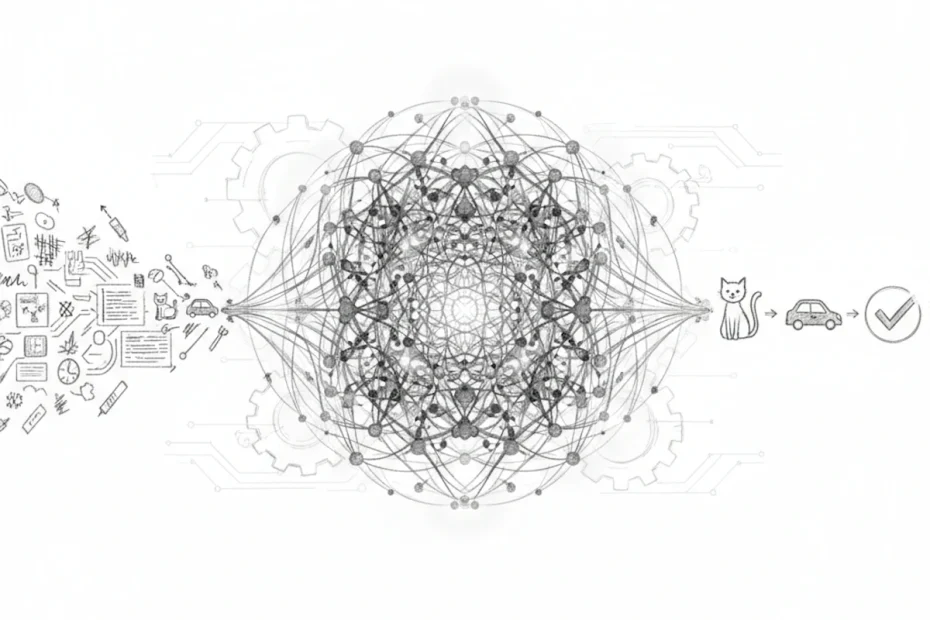
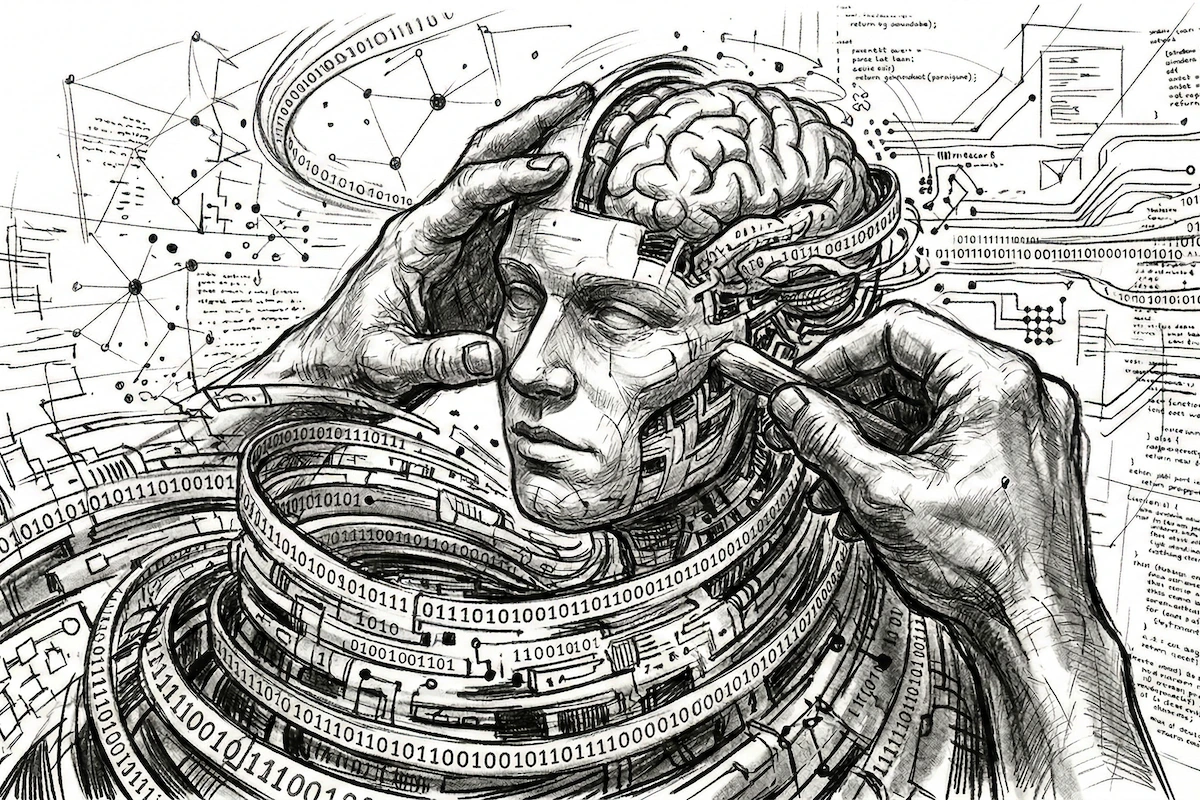
Deep Learning is the technology responsible for the technological revolution we are experiencing today. It is a sophisticated method of teaching computers to process data in a way inspired by the human brain. While traditional software follows rigid, pre-defined rules, Deep Learning allows machines to learn through experience, pattern observation, and the analysis of massive amounts of data.
On Free AI Online, every tool you use, from our programming assistants to our language models, is a direct product of Deep Learning. Understanding this concept is key to understanding how machines have finally succeeded in “understanding” us.
1. What is Deep Learning?
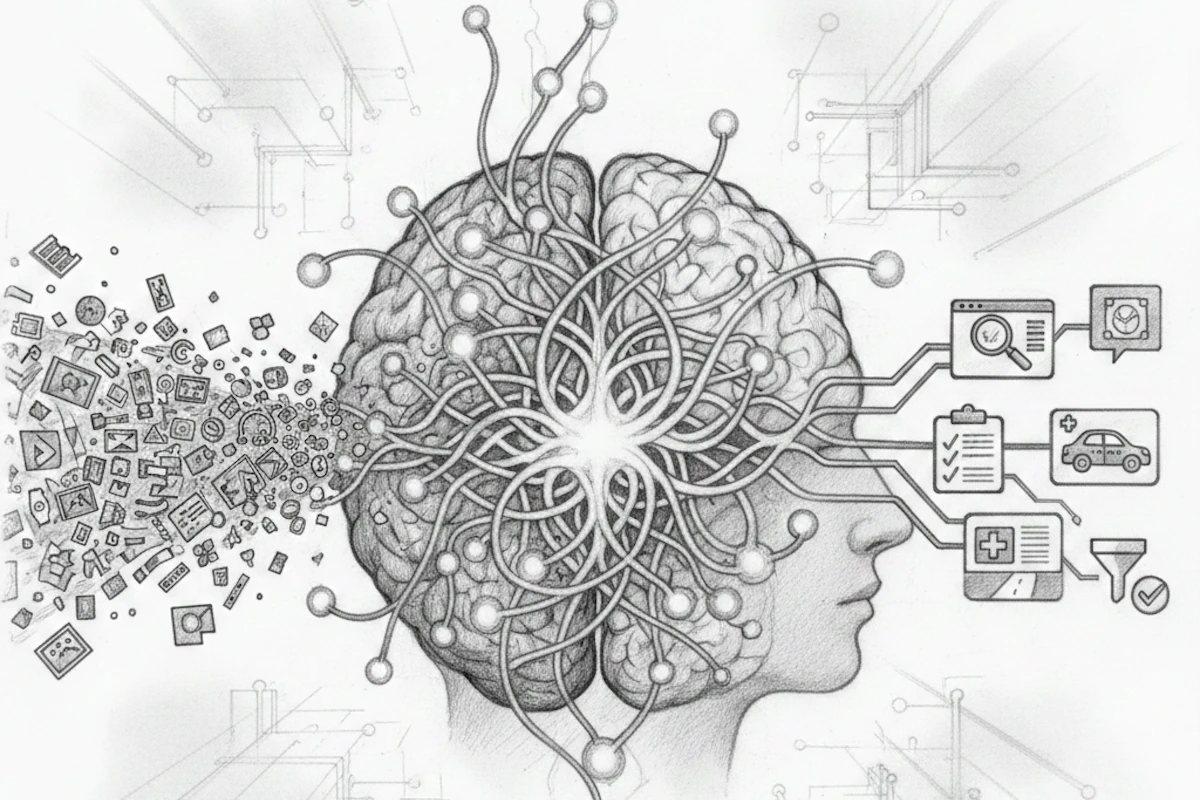
Deep Learning is a sub-category of Machine Learning that relies entirely on Artificial Neural Networks.
The term “Deep” refers to the number of layers within these neural networks. A traditional algorithm might have one or two layers of analysis, but a “Deep” model possesses hundreds or even thousands. These layers work together to filter and refine information:
- The input layer: Receives raw data (such as the pixels of an image or the characters of a text).
- The hidden layers: This is where the magic happens. Each layer identifies specific features (e.g., the first layer sees lines, the second sees shapes, and the third identifies a human face).
- The output layer: Provides the final result (e.g., “This is an image of a cat” or “The next word in this sentence should be ‘future'”).
2. How it works: The brain analogy
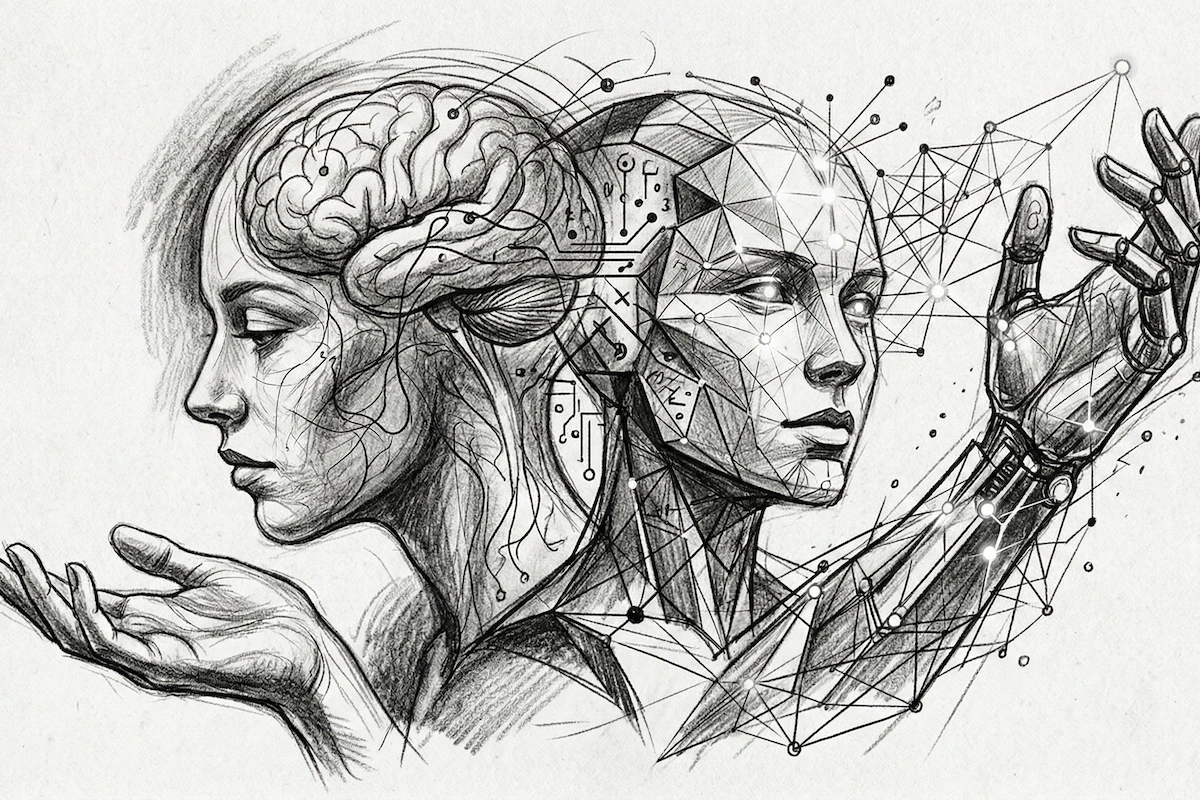
Deep Learning mimics the way biological neurons signal to one another. In a digital neural network:
- Connections: Every “neuron” is linked to others.
- Weights: Each connection has a “weight” that determines its importance.
- Training: During the learning phase, the model is fed millions of examples. If it makes an error, it slightly adjusts the weights of its connections. After billions of these micro-adjustments, the model “learns” to become accurate.
3. Why is deep learning dominating today?
Although theories on neural networks have existed for decades, Deep Learning only became dominant recently due to three factors:
- Massive data (Big Data): Deep Learning models are “data-hungry”. The explosion of the internet provided the billions of words and images necessary for their training.
- Computational power: Training these models requires immense power. The development of high-performance Graphics Processing Units (GPUs) made it possible to perform these calculations in weeks rather than centuries.
- Advanced architectures: Innovations such as the Transformer have allowed models to process information much more efficiently than ever before.
Related: What is AI Hallucination ?
4. Deep Learning vs. Traditional Machine Learning
The main difference lies in Feature Extraction.
- In Traditional Machine Learning, a human expert must tell the computer what to look for (e.g., “To identify a car, look for four wheels”).
- In Deep Learning, the model discovers the features itself. You simply give it 10,000 photos of cars, and it understands on its own that wheels, headlights, and mirrors are the defining elements of the object.
5. Practical applications on Free AI Online
Deep Learning is the invisible engine behind our features:
- Natural Language Processing (NLP): Enabling our agents to understand context, sarcasm, and complex instructions.
- Computer vision: Powering the ability to generate or analyse images based on textual descriptions.
- Code generation: Recognising patterns within billions of lines of code to help you write functional software instantly.
Deep Learning has transformed the dream of “intelligent machines” into reality. By moving away from fixed rules to a system that learns through layers of experience, we have created tools capable of interacting with the world in an almost human way. Now that you know more about this technology, explore our AI Glossary to learn even more about the world of AI!


Pingback: The dawn of AGI: Navigating the final frontier of intelligence
Pingback: Understanding GPUs for AI: Definitions, mechanics, and examples