

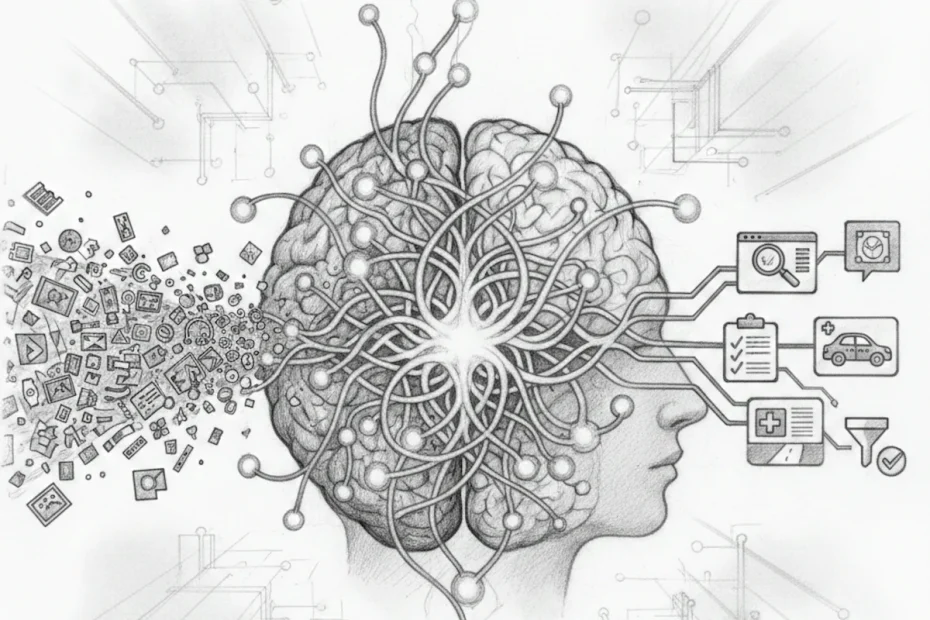
Machine Learning represents the most significant shift in computing since the invention of the microprocessor.
It is the transition from a world where humans give computers instructions to a world where humans give computers examples. As we navigate the complexities of the 21st century, understanding this technology is no longer optional for anyone looking to comprehend the modern digital landscape.
Defining the paradigm shift
Traditional software engineering relies on explicit logic. A developer writes a series of conditional statements, if X happens, then execute Y. This approach is highly effective for predictable tasks like accounting or word processing. However, it fails miserably when faced with the ambiguity of the real world, such as recognizing a human face or translating the nuance of a poem.
Machine Learning solves this by using induction. Instead of pre-defining rules, we feed an algorithm vast amounts of data and allow it to identify the underlying statistical structures. The machine “learns” by creating its own internal mathematical model to map inputs to outputs. In essence, Machine Learning is the automated process of discovering patterns in data to make predictions or decisions.
The taxonomy of learning styles
To understand how a machine improves its performance over time, we must look at the three primary frameworks used to train these systems.
Supervised learning: The guided path
This is the most common form of Machine Learning. The algorithm is provided with a training dataset that includes both the input data and the correct answers, known as labels. The goal is for the model to learn a general rule that maps inputs to outputs so accurately that it can predict the label for new, unseen data.
Applications: Credit scoring, image classification, and medical diagnosis based on historical patient records.
Unsupervised learning: Discovering hidden structures
In this scenario, the data has no labels. The machine is tasked with finding interesting structures or groupings within the information. It is a process of self-discovery.
The most common technique here is clustering, where the algorithm groups data points that share similar characteristics.
Applications: Customer segmentation for marketing, anomaly detection in cybersecurity, and identifying themes in large archives of documents.
Reinforcement learning: Learning through interaction
Inspired by trial-and-error learning, this method places an autonomous agent in a dynamic environment. The agent receives rewards for positive actions and penalties for mistakes. Over millions of iterations, the system optimizes its strategy to maximize the cumulative reward.
Applications: Robotics, autonomous drones, and complex strategic games like Chess or Go.
Related: Vibe coding: The art of coding by instinct
The mathematical engine: Optimization and loss
While the results can feel intuitive, the process is purely mathematical. At the heart of every Machine Learning model is an optimization problem. When a model makes a prediction, it compares that prediction to the actual truth using a Loss Function.
One of the standard metrics for evaluating error is the Mean Squared Error (MSE), which quantifies the average squared difference between estimated values and the actual value:

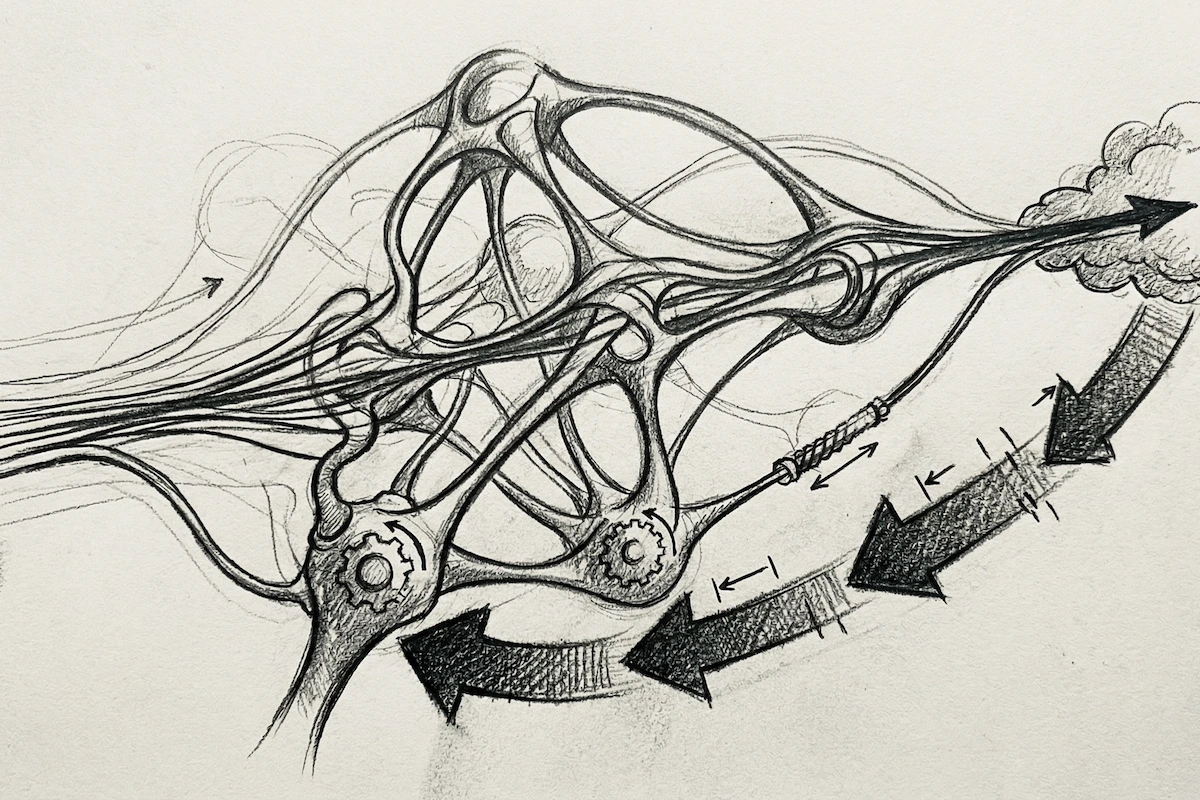
The learning process involves an algorithm called Gradient Descent, which calculates the slope of the error and adjusts the internal parameters of the model to “slide down” toward the lowest possible error. This iterative refinement is the mathematical definition of learning.
Deep Learning and the power of neural networks
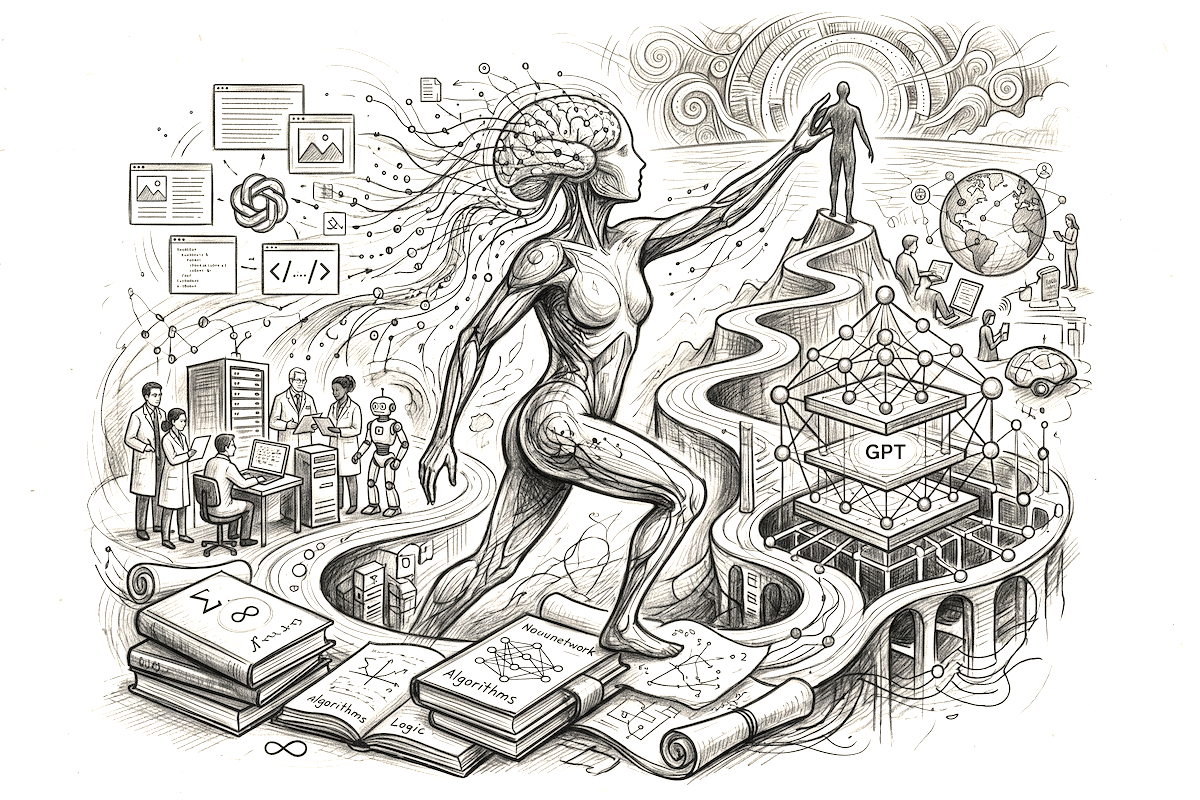
A major subset of Machine Learning that has dominated recent headlines is Deep Learning. This technology is inspired by the structure of the human brain, utilizing layers of artificial neurons.What makes Deep Learning “deep” is the number of layers through which data is transformed. Each layer acts as a filter of increasing abstraction.
In a voice recognition system, the first layer might identify raw frequencies, the second layer identifies phonemes, and the final layers understand full words and intent. This hierarchical feature extraction allows machines to process “unstructured data” like video and natural language with unprecedented accuracy.
Ethical frontiers and technical constraints
The rapid adoption of Machine Learning brings significant challenges. The most pressing is the issue of algorithmic bias. Because these models learn from historical data, they inevitably inherit the prejudices present in that data. If a hiring algorithm is trained on twenty years of resumes from a biased industry, it will likely learn to favor certain demographics over others.
Furthermore, there is the “Black Box” problem. As models become more complex, especially in Deep Learning, it becomes increasingly difficult for human engineers to explain exactly why a specific decision was made. This lack of interpretability is a major hurdle in regulated industries like law and healthcare.
From algorithms to augmentation
Machine Learning is not a distant sci-fi concept; it is the invisible infrastructure of the modern world. It is the engine behind global supply chains, the curator of our social media feeds, and the primary tool for modern scientific discovery.
As we move forward, the focus is shifting toward “Explainable AI” and “Small Data” learning, aiming to make these systems more transparent and less reliant on massive energy consumption.By delegating the task of pattern recognition to machines, humanity is gaining the ability to solve problems of a scale and complexity that were previously unthinkable.



Pingback: Understanding Underfitting: The trap of over-simplification in AI
Pingback: What is Backpropagation and how does it drive AI?