
In the world of technology, Artificial Intelligence often feels like digital magic. However, behind every precise medical diagnosis or every fluent line of code generated by a chatbot lies a silent but vital engine: Training Data.
To truly understand AI, one must look past the algorithms and realise that machines do not learn through human-like reasoning; they learn through the massive, statistical ingestion of examples.
The essence of training data: Fueling the machine
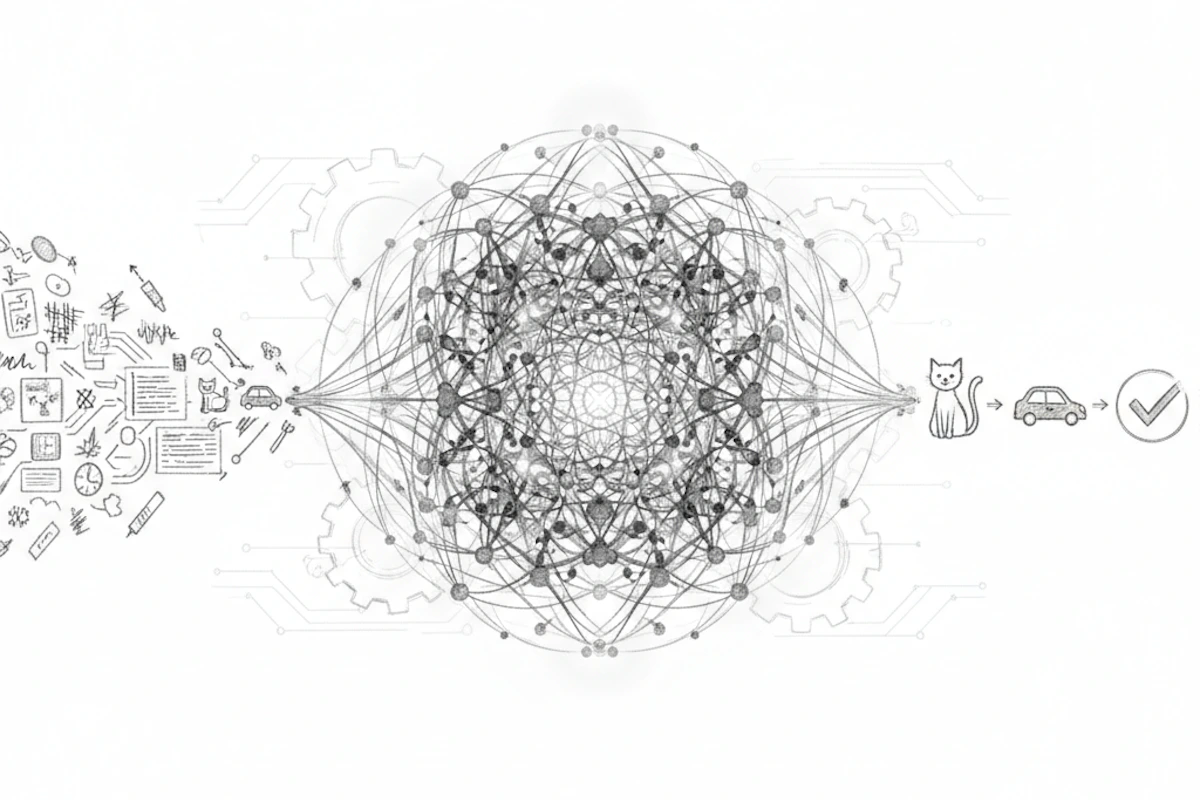
Imagine trying to explain what an apple is to someone who has never seen fruit. You might describe its roundness, its vibrant red or green skin, and its crisp texture. In the realm of AI, we don’t provide definitions; we provide examples. Training data is this collection of examples, thousands, sometimes billions of them, that allow a model to detect recurring patterns.
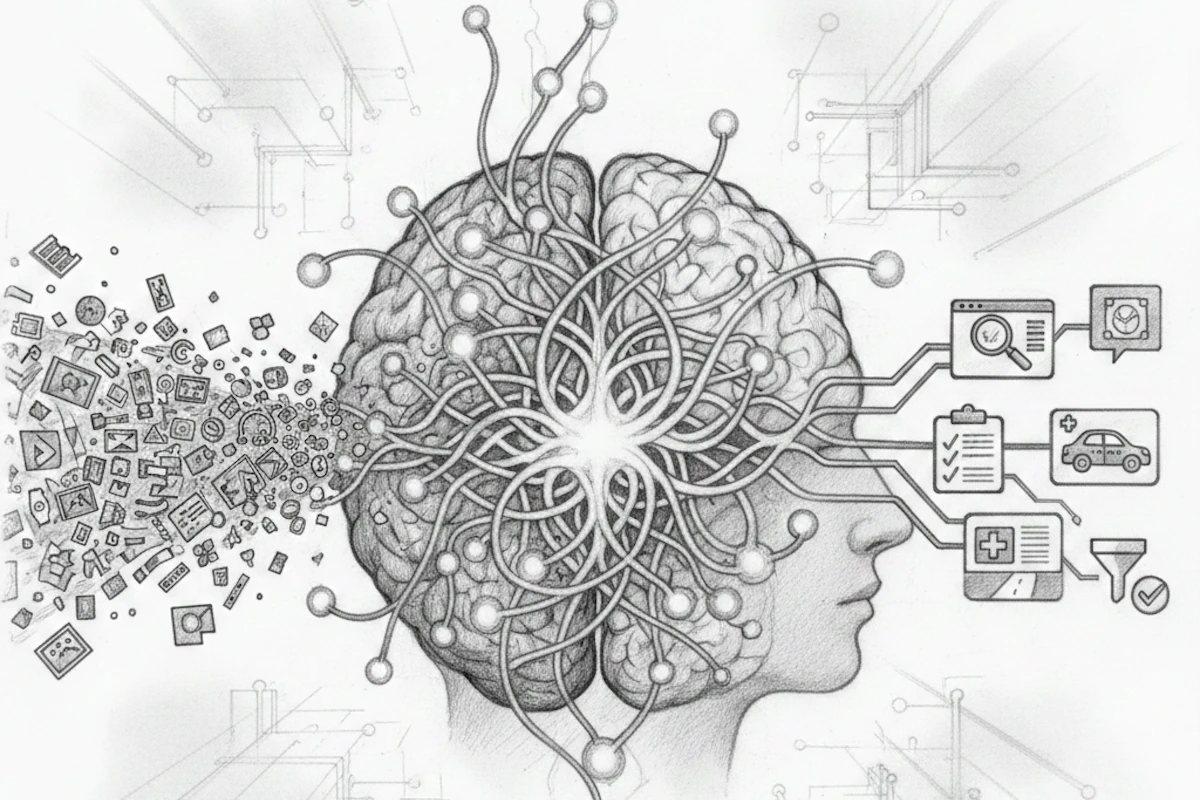
When an AI is trained, it is fed a raw dataset. For a visual recognition system, this consists of images. For a Large Language Model (LLM), it is a vast library of text sourced from books, articles, and websites. Training data acts as the foundation upon which the algorithm adjusts its internal parameters to minimise prediction errors.
Quality over quantity: The “Garbage In, Garbage Out” rule
There is a famous adage in data science: “Garbage In, Garbage Out.” The performance of any AI is strictly limited by the quality of its training data. If you train a self-driving car system solely on sunny London streets, it will be dangerously ill-equipped to handle a blizzard in the Scottish Highlands.
Creating a high-quality dataset is a meticulous process involving three crucial stages:
- Collection: Gathering relevant and diverse data points.
- Cleaning: Removing duplicates, correcting errors, and filtering out “noise” (irrelevant information).
- Labelling: This is where human intervention is often paramount. For an AI to know an image contains a cat, a human must first “tag” or label that image accordingly.
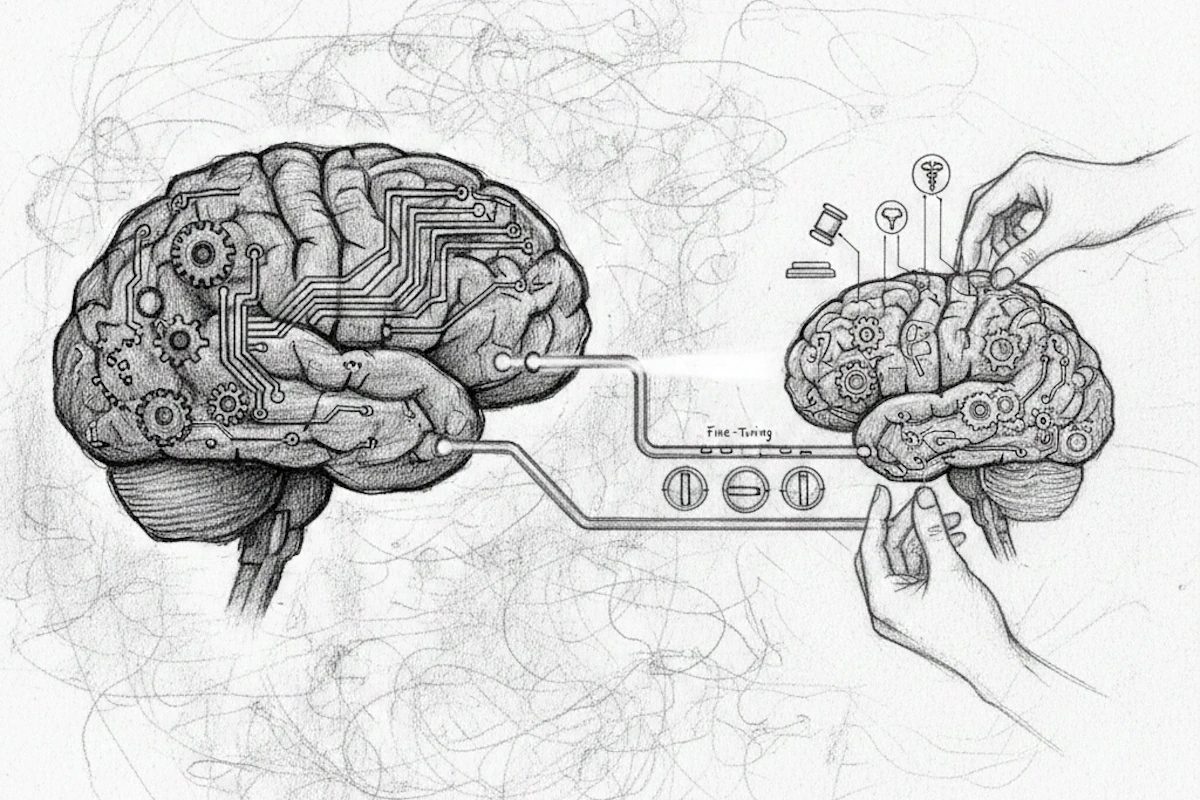
Related: What is Fine-Tuning?
Bias: The distorted mirror of society
Perhaps the most pressing issue regarding training data is bias. Because AI learns from data produced by humans, it inevitably inherits our prejudices. If historical data used to train a recruitment tool shows fewer women in senior leadership roles, the AI may incorrectly conclude that men are “better” candidates.
Representativeness is the primary challenge for the coming years. “Fair” training data must be balanced; otherwise, the AI will simply replicate and amplify the discriminations of the past. Researchers are now developing “de-biasing” techniques to ensure models remain as neutral and equitable as possible.
A looming data drought? The rise of synthetic data
With the exponential growth of models like GPT-5, a new question arises: are we running out of human-generated text to feed the machines? Some experts believe we have already exhausted much of the high-quality public content available on the web.
To solve this, a new trend is emerging: Synthetic Data. This is data generated by one AI to train another. While it may sound like a “snake eating its own tail,” synthetic data allows for the creation of rare scenarios, such as a specific car crash to test safety AI, or the protection of privacy by avoiding the use of real personal information.
The verdict: Data is destiny
Training data is far more than a simple list of files; it is the curriculum of Artificial Intelligence. It is through this data that the machine acquires its world-view, its processing power, and, unfortunately, its flaws. The future of AI will not be decided solely by the power of computer chips, but by our ability to curate rich, ethical, and surgically precise datasets.