

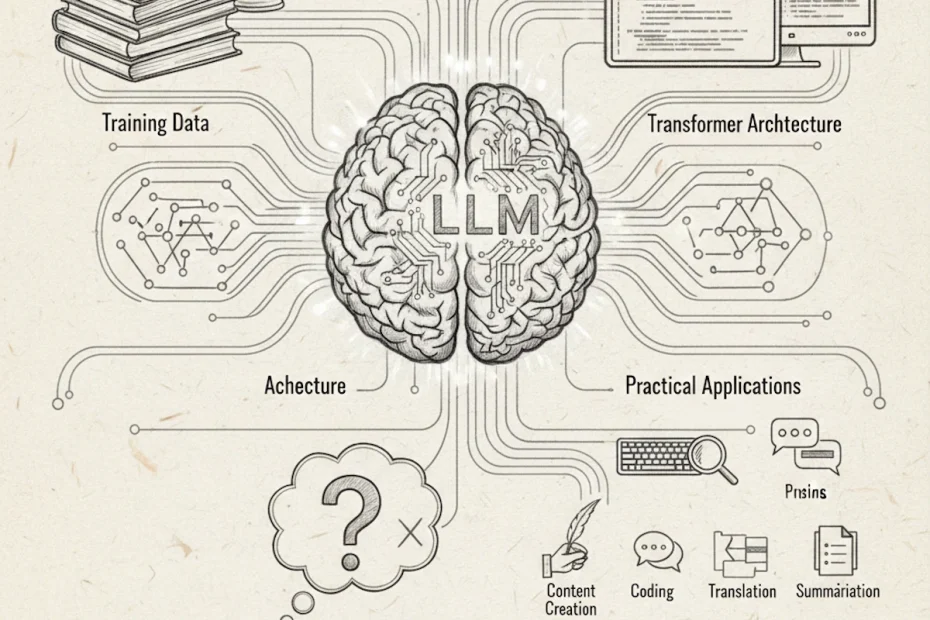
In the rapidly evolving landscape of Artificial Intelligence, one term has become the cornerstone of almost every major breakthrough: the LLM. Whether you are using free ChatGPT, Grok, or our specialized coding tools on Free AI Online, you are interacting with a Large Language Model. But to truly harness the power of these tools, one must understand the intricate engineering and the vast scale behind them.
1. Defining the LLM: Scale and sophistication
A LLM, or Large Language Model, is a subset of Artificial Intelligence designed to understand, interpret, and generate human language with a level of fluency that was once thought impossible for machines.
The name itself provides the key to its power:
- “Large” refers to two dimensions. First, the Training Data: these models ingest petabytes of text, encompassing nearly the entirety of public human knowledge. Second, the Parameters: these are the internal variables or “connections” the model uses to make decisions. Modern LLMs, such as the ones we offer on our platform, possess hundreds of billions of parameters.
- “Language” refers to its primary domain. While they can handle math and code, their core strength lies in understanding the syntax, semantics, and nuances of human linguistics.
- “Model” refers to the complex mathematical representation of language that is created through the learning process.
2. The architecture of revolution: The Transformer
The turning point for LLMs came in 2017 with the introduction of the Transformer architecture. Before this, AI models processed text sequentially (word by word), often losing the context of the beginning of a sentence by the time they reached the end.
The Transformer introduced the Self-Attention Mechanism. This allows the model to assign “weight” or “importance” to different words in a sentence simultaneously, regardless of how far apart they are. For example, in the sentence “The scientist looked through the telescope and saw a star,” the mechanism of attention helps the AI immediately link the “star” to the “telescope,” understanding the astronomical context instantly.
This ability to grasp global context is what makes LLMs feel so human-like.
Related: Mastering prompt engineering: 5 pro secrets to get perfect results every time
3. The training process: From chaos to clarity
Building a LLM is a monumental task that involves several stages of high-intensity computing:
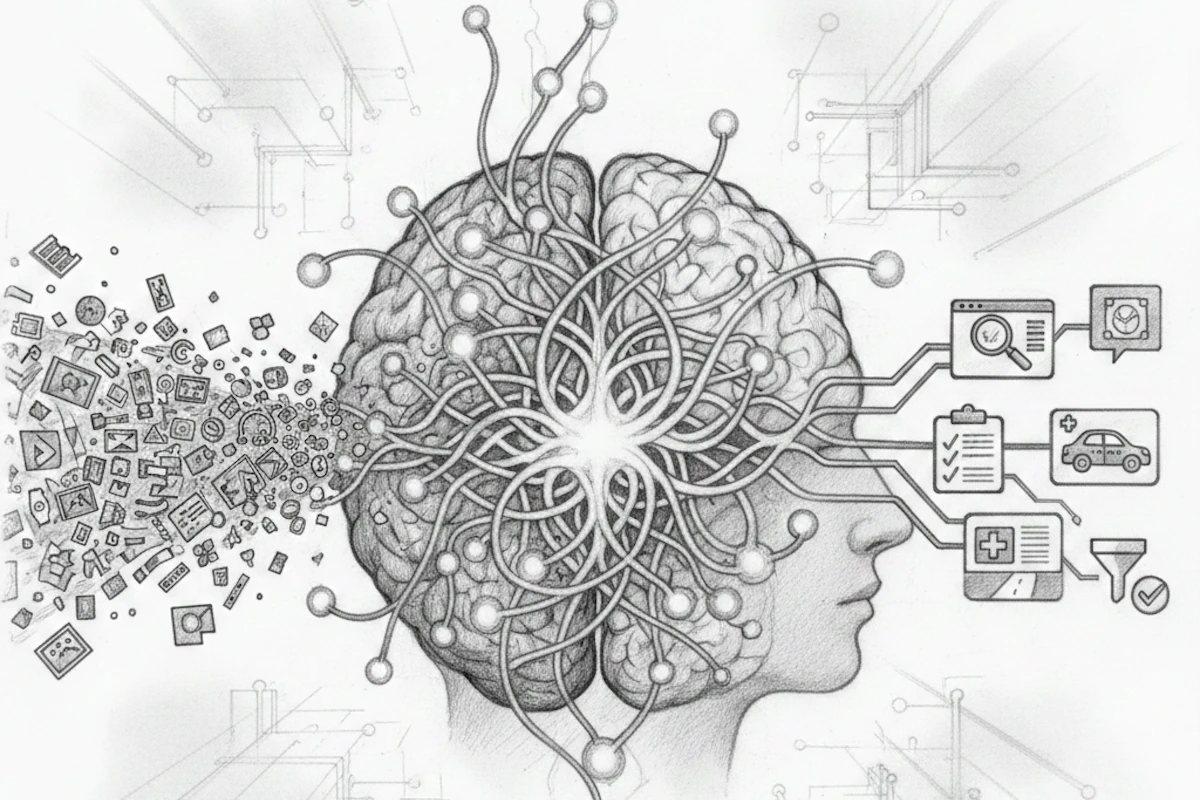
- Unsupervised Pre-training: The model is fed a massive dataset (books, articles, websites, code). It plays a continuous game of “predict the next word.” By doing this trillions of times, it learns the laws of grammar, facts about history, the logic of mathematics, and the structure of programming languages.
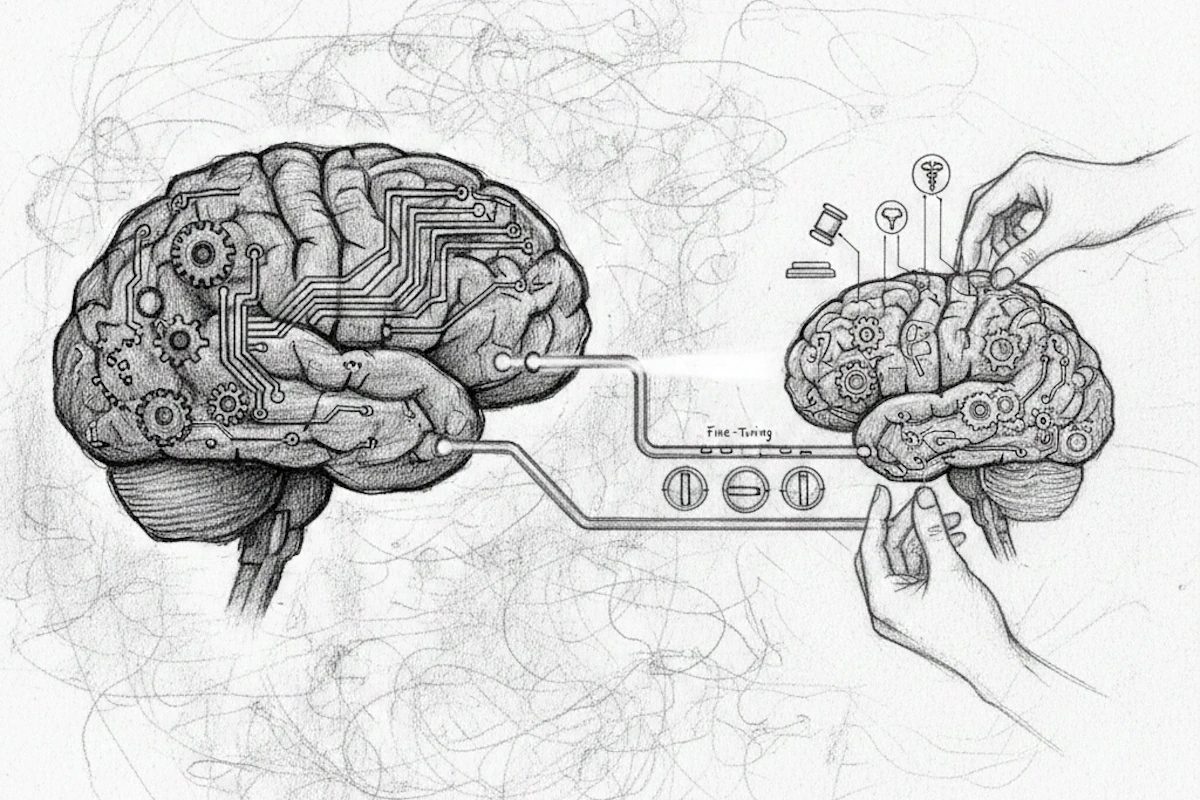
- Fine-Tuning & Alignment: Raw models can sometimes produce unpredictable or unhelpful results. To solve this, developers use RLHF (Reinforcement Learning from Human Feedback). Human trainers rank the AI’s responses, teaching it to be helpful, polite, and safe. This “polishing” stage is what turns a raw engine into the sophisticated assistant you use on our site.
4. Practical applications on Free AI Online
On our platform, we provide access to these “digital brains” to help you solve real-world problems:
- Advanced Content Creation: Moving beyond simple text generation to crafting structured reports, creative stories, and professional emails.
- Complex Problem Solving: Using the LLM’s reasoning capabilities to debug code, explain scientific theories, or brainstorm business strategies.
- Global Communication: Leveraging the model’s multilingual training to translate and localize content while maintaining the original tone and intent.
5. Understanding the limits: The “Probabilistic” nature
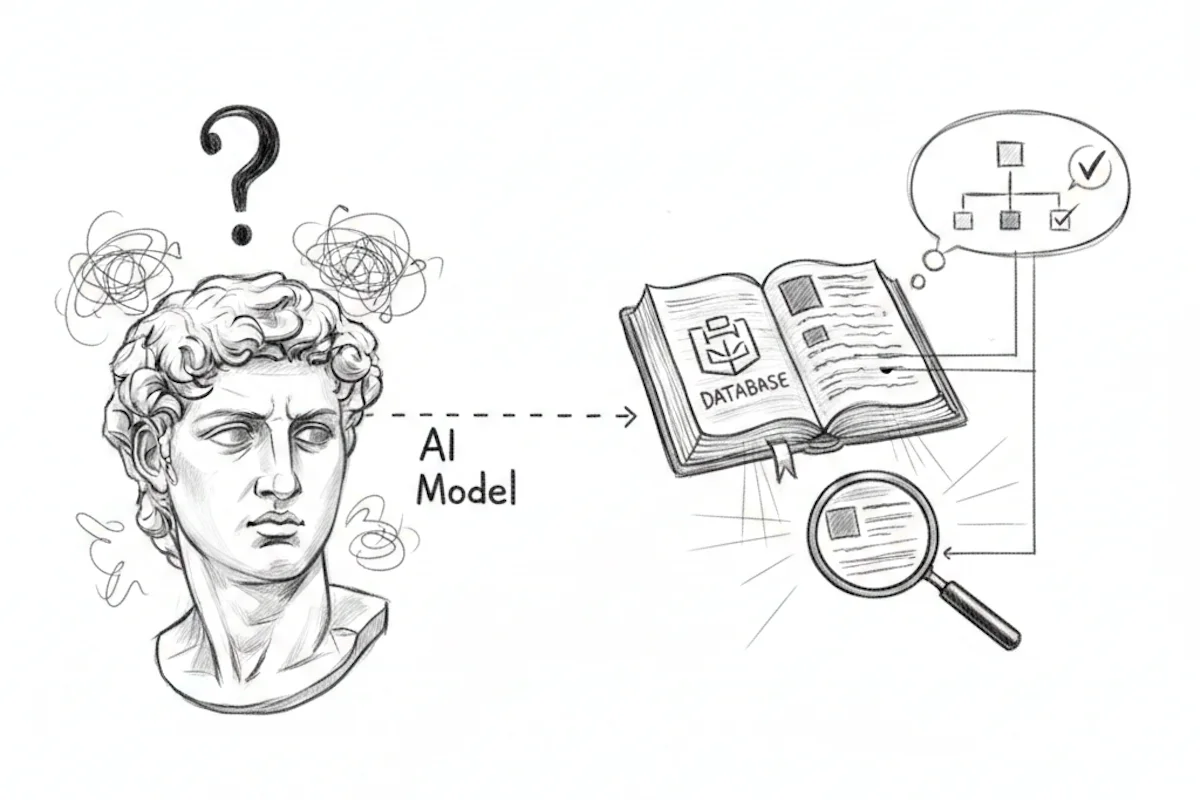
It is vital for our users to understand that a LLM is a probabilistic engine, not a conscious being. It does not “know” truth in the way a human does; it calculates the most likely sequence of words based on its training.
This leads to a phenomenon known as Hallucination, where the AI might present a false fact with absolute confidence. At Free AI Online, we advocate for responsible AI use: always verify critical information, especially when it concerns legal, medical, or financial matters.




Pingback: What is a prompt? The art of directing Artificial Intelligence
Pingback: AI Hallucination: When artificial intelligence imagines reality
Pingback: Demystifying AI: Launching the Free AI Online Glossary
Pingback: AI: Basque Startup Multiverse Computing shakes up Europe with HyperNova 60B
Pingback: What is Fine-Tuning: From general intelligence to specialized expertise
Pingback: What is RAG in AI? A deep dive into retrieval-augmented generation
Pingback: The silent architect: Why training data is the true brain of AI
Pingback: The 2026 comprehensive guide to Open-Access LLMs: Why privacy and no-registration AI are redefining the global internet
Pingback: AI: The end of the "Wow" effect or the calm before the storm?
Pingback: How to use the AI humanizer ? The ultimate guide to natural, AI-proof text