
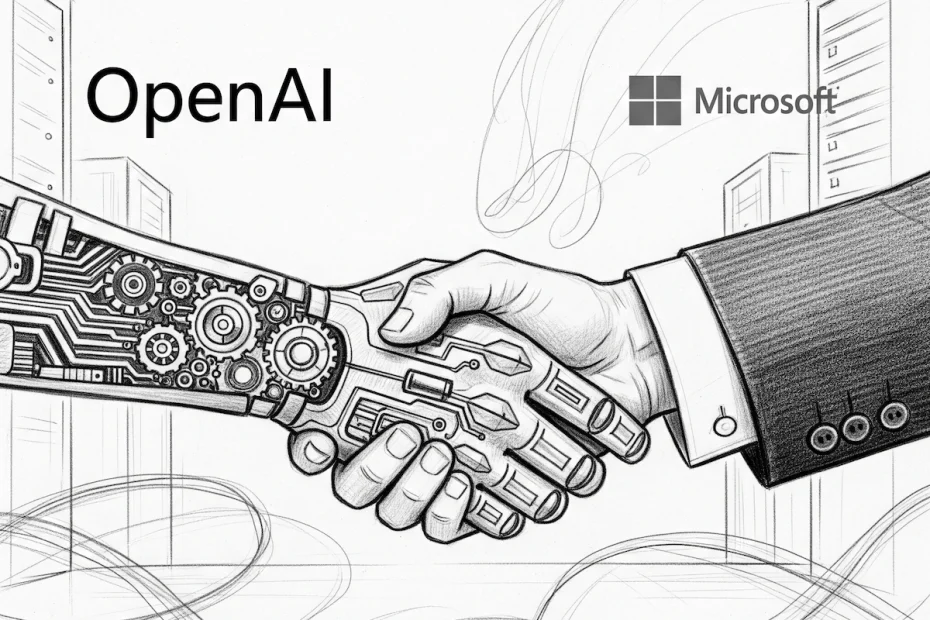
In the effervescent universe of artificial intelligence, where alliances form and clash to the rhythm of technological breakthroughs, a landmark milestone has just been achieved. Microsoft and OpenAI, two titans whose paths have intertwined in a blend of fruitful collaboration and intense frictions, have announced an agreement to extend their partnership.
This initiative, still in the finalization phase, could sweep away a major obstacle on OpenAI’s ambitious road: its transformation into a for-profit entity. Let’s explore what this means for the future of AI and the dynamics underpinning this reconciliation.
A Partnership Forged in the Fire of Innovations
Let’s recall that Microsoft is far from a mere bystander in OpenAI’s ecosystem. From the early stumbles of this visionary startup, the Redmond giant positioned itself as a top strategic ally. As one of its flagship investors, Microsoft poured massive resources into propelling OpenAI’s AI models to the heart of its own offerings.
Think of Azure, the cloud platform that pulses to the beat of ChatGPT, or the seamless integrations in tools like Office and Bing. This symbiosis has allowed millions of users to glimpse the wonders of generative AI, turning everyday tasks into intuitive and powerful experiences.Yet, this closeness has not been without turmoil. Tensions peaked in recent months, exposing the fragilities of a relationship where one actor holds considerable leverage.
Indeed, Microsoft provides OpenAI’s exclusive cloud infrastructure, a role that grants it privileged access to the startup’s most cutting-edge innovations. This mutual dependence, while accelerating development, also sowed the seeds of discord, particularly around control and strategic direction. It is in this charged context that the announcement of this agreement emerges like a ray of sunshine: a sign of maturity, where collaboration triumphs over rivalries.
The For-Profit Conversion: A Strategy to Dominate the AI Market
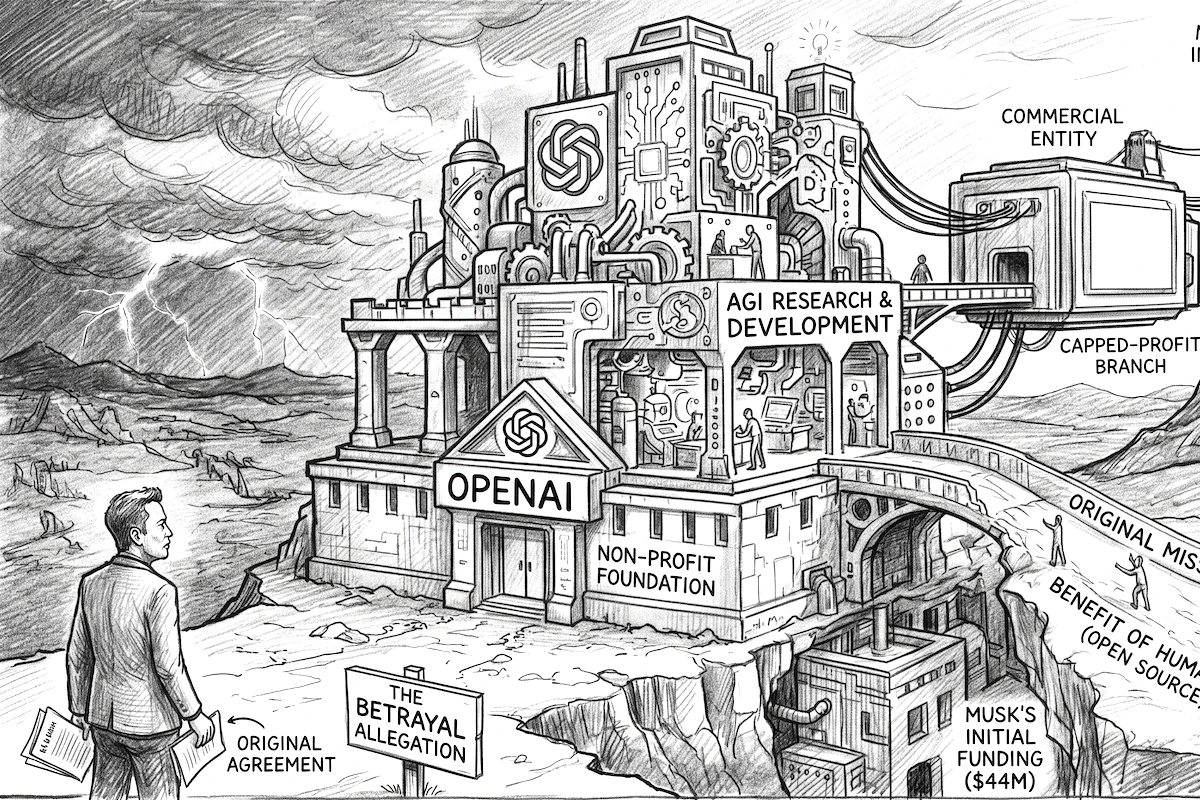
At the heart of this deal lies OpenAI’s most audacious project to date: a profound restructuring to incorporate a for-profit branch. Traditionally rooted in a hybrid non-profit structure, the startup now seeks to free itself from certain constraints to better conquer the business world. This shift is far from trivial.
It aims to attract more substantial capital, accelerate R&D investments, and position OpenAI as an uncontested leader against competitors like Google or Anthropic.The agreement with Microsoft acts as an essential catalyst. By extending their alliance, it dissipates the uncertainties that were hindering this transition.
Among the identified barriers—governance issues, intellectual property allocations, or power balances—this arrangement removes a crucial one: the stability of the cloud and technology partnership. Without this serenity, the conversion risked bogging down in endless negotiations. Now, OpenAI can move forward with greater confidence, freed from a Sword of Damocles that loomed over its ambitions.
Implications for the AI Ecosystem: Opportunities and Stakes
This reconciliation is not just an internal affair; it reshapes the contours of the AI industry. On one side, it strengthens Microsoft’s position as an indispensable pivot, with continued access to OpenAI’s breakthroughs that will fuel its flagship products. Imagine even more sophisticated AI assistants in Windows or Teams, capable of predicting your needs with near-telepathic precision.
On the other, for OpenAI, this step toward for-profit opens doors to massive funding, potentially billions of dollars, which could boost projects like multimodal models or applications in health and education. But beware: this profit-driven model raises ethical questions. How to preserve the original mission of “beneficial AI for humanity” when shareholders demand returns? Observers fear a drift toward prioritizing profit over safety or equity.
Finally, on the global market, this deal could intensify competition. European or Asian startups might accelerate their own alliances to avoid falling behind, fostering decentralized innovation. It’s a call for vigilance: AI is no longer an isolated playground, but a battlefield where smart partnerships dictate the winners.
Toward a Collaborative and Profitable Future
In summary, the Microsoft-OpenAI agreement marks an optimistic turning point in a saga that has birthed some of the most emblematic AI advancements of our era. By overcoming past bumps, these two entities pave the way for a more agile and ambitious OpenAI, ready to fully embrace the for-profit model. For AI enthusiasts like us, it’s an invitation to follow the next chapters closely: how will this restructuring influence the tools we use daily?
And above all, what world will AI lead us to tomorrow?Stay tuned to this blog for in-depth analyses of these evolutions. Artificial intelligence is not just a technology; it’s the future we’re building together. What do you think? Share your thoughts in the comments!