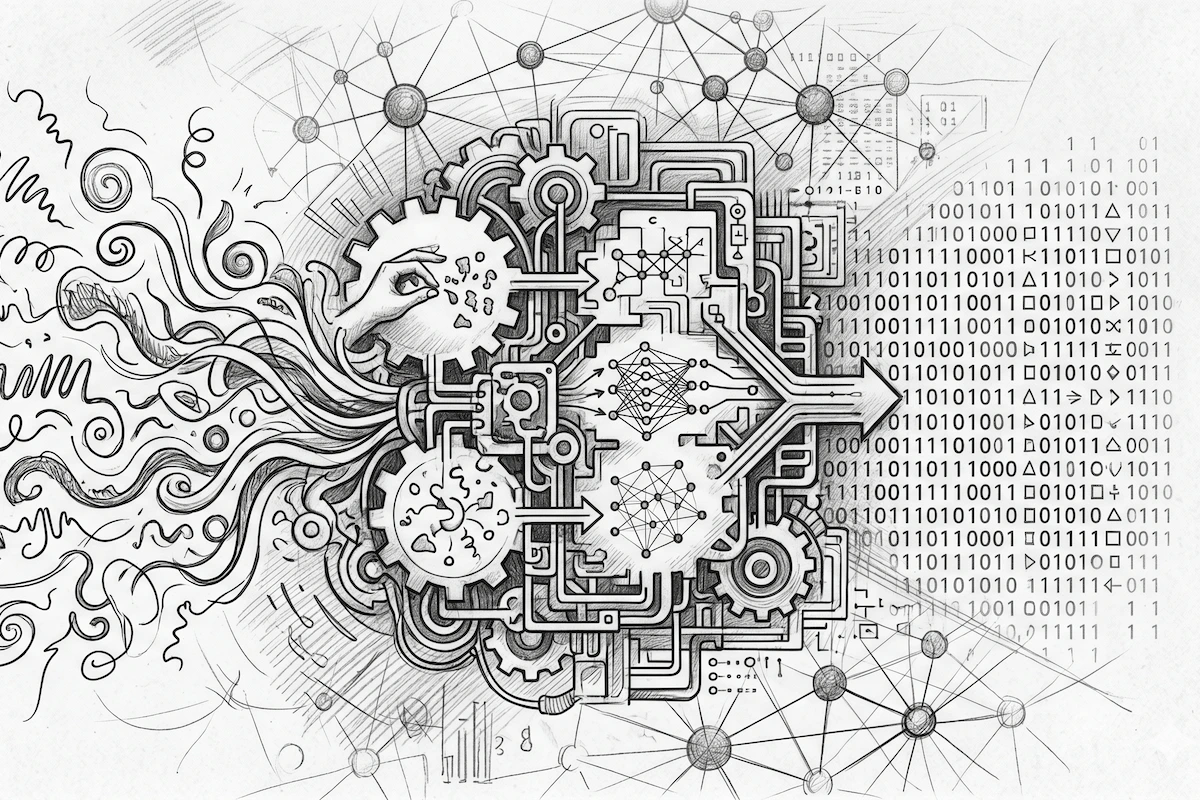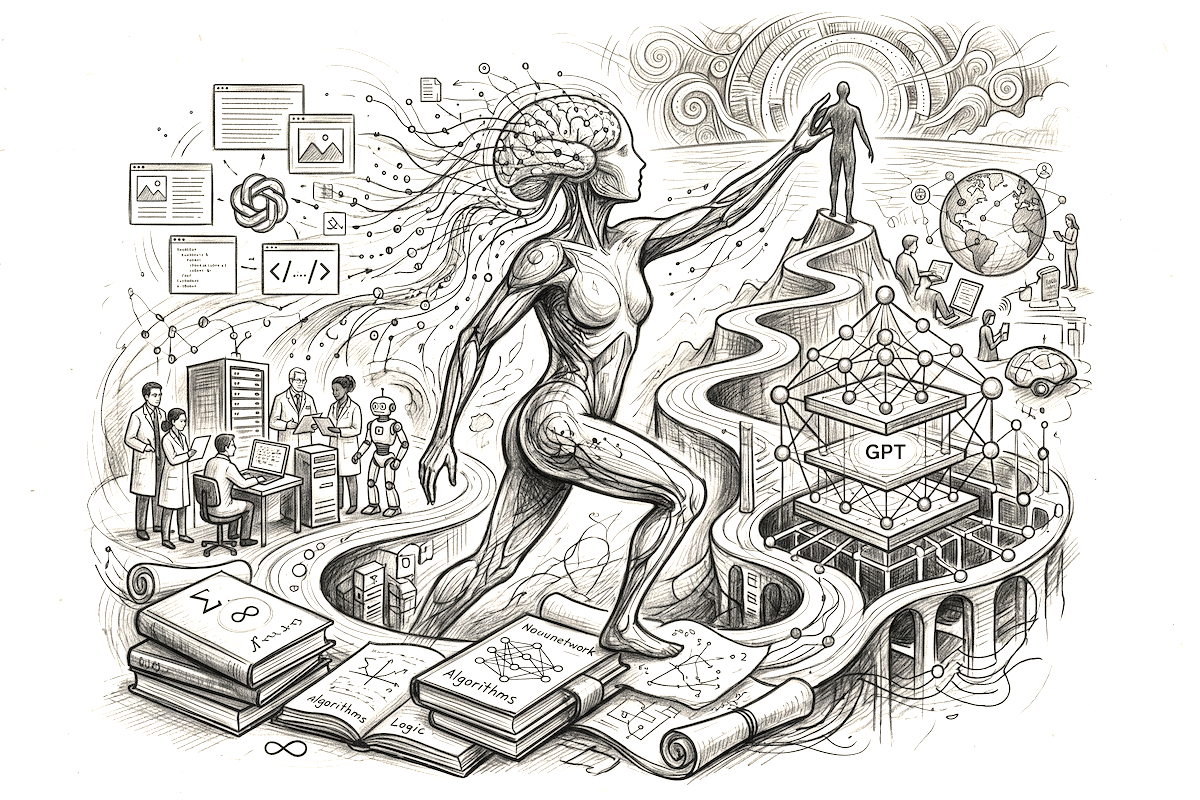

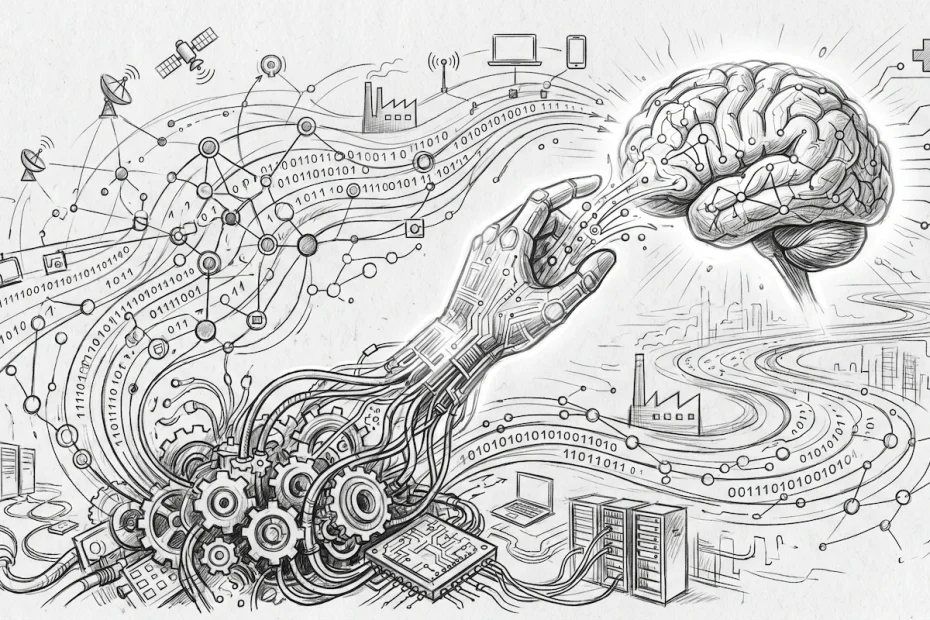
Big Data is often described as the fuel for Artificial Intelligence. Without this massive influx of data, modern algorithms, particularly those based on Deep Learning, would be nothing more than theoretical frameworks with no practical utility.
Here is a detailed exploration of this technological synergy.
Defining Big Data
Big Data refers to data sets that are so voluminous, fast, or complex that they exceed the processing capabilities of traditional database management software. It is generally defined by the 5 Vs:
- Volume: Massive amounts of data generated every second (petabytes, exabytes).
- Velocity: The speed at which data is created and must be analyzed (real-time streams).
- Variety: The diversity of data types (text, images, videos, sensor signals, server logs).
- Veracity: The quality and reliability of the collected data.
- Value: The ability to transform raw data into actionable insights.
The indissociable link between Big Data and AI
AI, and more specifically Machine Learning, relies on pattern recognition. For a model to be accurate, it must be trained on a sample that is representative of reality.
Model training
The more data a neural network algorithm consumes, the more it refines its internal parameters. For example, for an AI to recognize a cat, it is not given a logical definition (such as “an animal with pointed ears”); instead, it analyzes millions of images of cats to deduce the common characteristics itself.
Computing power
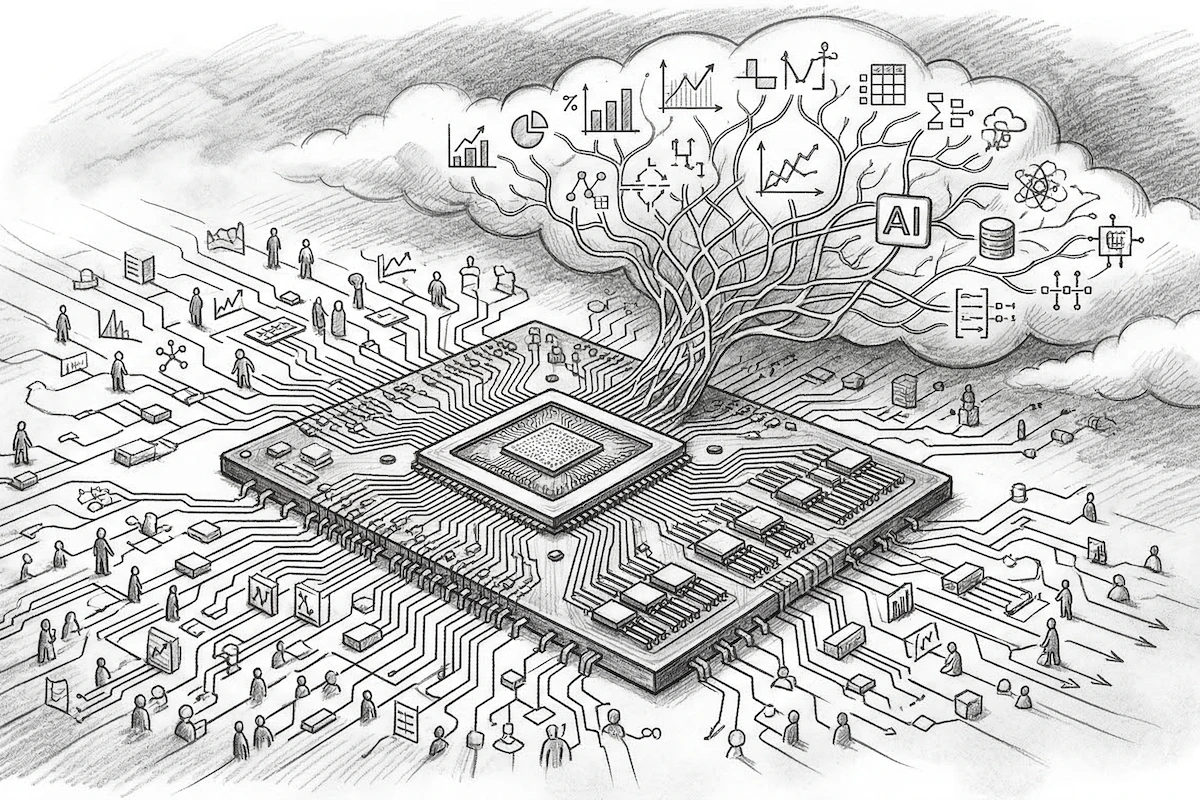
Big Data provides the raw material, while AI provides the brain. Modern infrastructures (Cloud Computing, GPUs) make it possible to process these massive volumes to extract predictions in milliseconds.
Concrete application examples
Predictive maintenance in industry
Connected factories generate constant streams of data via temperature, vibration, and pressure sensors. AI analyzes this data in real-time to predict when a part is about to fail before the incident even occurs, thus avoiding costly production halts.
Recommendation systems
Platforms like Netflix or Amazon use Big Data (browsing history, watch time, clicks, purchases from millions of users) to feed algorithms that suggest the next piece of content you are likely to enjoy.
Autonomous vehicles
An autonomous vehicle processes gigabytes of data per second from cameras, Lidars, and Radars. The onboard AI must analyze this Big Data instantaneously to distinguish a pedestrian from a pole and make a braking decision.
Healthcare and precision medicine
By cross-referencing the medical records of millions of patients, genomic sequencing (Big Data), and scientific publications, AI can help doctors diagnose rare diseases or predict the effectiveness of a specific treatment for a given individual.
Related: Who invented Artificial Intelligence?
Big Data challenges for AI
Scaling up presents several major issues that engineers must resolve:
- Storage and cost: Conserving petabytes of data requires expensive and energy-intensive infrastructure.
- Data cleaning: Approximately 80% of the work in AI consists of sorting and cleaning data. Biased or erroneous data inevitably leads to unfair or false AI decisions (the concept of “Garbage In, Garbage Out”).
- Privacy protection: With regulations such as the GDPR, the use of Big Data must respect user anonymity and consent.
Big Data is the infrastructure upon which modern Artificial Intelligence is built. Without the diversity and mass of today’s data, AI would remain limited to simple, rigid tasks. Together, they form a virtuous cycle: the more data we produce, the more powerful AI becomes, and the more powerful AI becomes, the better it allows us to make sense of the global digital explosion.